This weekend I was schmoozing at an event when some guy asked me what kind of history I study. I said “I’m currently researching the role of gender in Jewish emigration out of the Third Reich,” and he replied “oh you just threw gender in there for fun, huh?” and shot me what he clearly thought to be a charming smile.
The reality is that most of our understandings of history revolve around what men were doing. But by paying attention to the other half of humanity our understanding of history can be radically altered.
For example, with Jewish emigration out of the Third Reich it is just kind of assumed that it was a decision made by a man, and the rest of his family just followed him out of danger. But that is completely inaccurate. Women, constrained to the private social sphere to varying extents, were the first to notice the rise in social anti-Semitism in the beginning of Hitler’s rule. They were the ones to notice their friends pulling away and their social networks coming apart. They were the first to sense the danger.
German Jewish men tended to work in industries which were historically heavily Jewish, thus keeping them from directly experiencing this “social death.” These women would warn their husbands and urge them to begin the emigration process, and often their husbands would overlook or undervalue their concerns (“you’re just being hysterical” etc). After the Nuremberg Laws were passed, and after even more so after Kristallnacht, it fell to women to free their husbands from concentration camps, to run businesses, and to wade through the emigration process.
The fact that the Nazis initially focused their efforts on Jewish men meant that it fell to Jewish women to take charge of the family and plan their escape. In one case, a woman had her husband freed from a camp (to do so, she had to present emigration papers which were not easy to procure), and casually informed him that she had arranged their transport to Shanghai. Her husband—so traumatized from the camp—made no argument. Just by looking at what women were doing, our understanding of this era of Jewish history is changed.
I have read an article arguing that the Renaissance only existed for men, and that women did not undergo this cultural change. The writings of female loyalists in the American Revolutionary period add much needed nuance to our understanding of this period. The character of Jewish liberalism in the first half of the twentieth century is a direct result of the education and socialization of Jewish women. I can give you more examples, but I think you get the point.
So, you wanna understand history? Then you gotta remember the ladies (and not just the privileged ones).
Holy fuck. I was raised Jewish— with female Rabbis, even!— and I did not hear about any of this. Gender studies are important.
“so you just threw gender in there for fun” ffs i hope you poured his drink down his pants
I actually studied this in one of my classes last semester. It was beyond fascinating.
There was one woman who begged her husband for months to leave Germany. When he refused to listen to her, she refused to get into bed with him at night, instead kneeling down in front of him and begging him to listen to her, or if he wouldn’t listen to her, to at least tell her who he would listen to. He gave her the name of a close, trusted male friend. She went and found that friend, convinced him of the need to get the hell out of Europe, and then brought him home. Thankfully, her husband finally saw sense and moved their family to Palestine.
Another woman had a bit more control over her own situation (she was a lawyer). She had read Mein Kampf when it was first published and saw the writing on the wall. She asked her husband to leave Europe, but he didn’t want to leave his (very good) job and told her that he had faith in his countrymen not to allow an evil man to have his way. She sent their children to a boarding school in England, but stayed in Germany by her husband’s side. Once it was clear that if they stayed in Germany they were going to die, he fled to France but was quickly captured and killed. His wife, however, joined the French Resistance and was active for over a year before being captured and sent to Auschwitz.
(This is probably my favorite of these stories) The third story is about a young woman who saved her fiance and his father after Kristallnacht. She was at home when the soldiers came, but her fiance was working late in his shop. Worried for him, she snuck out (in the middle of all the chaos) to make sure he was alright. She found him cowering (quite understandably) in the back of his shop and then dragged him out, hoping to escape the violence. Unfortunately, they were stopped and he, along with hundreds of other men, was taken to a concentration camp. She was eventually told that she would have to go to the camp in person to free him, and so she did. Unfortunately, the only way she could get there was on a bus that was filled with SS men; she spent the entire trip smiling and flirting with them so that they would never suspect that she wasn’t supposed to be there. When she got to the camp, she convinced whoever was in charge to release her fiance. She then took him to another camp and managed to get her father-in-law to be released. Her father-in-law was a rabbi, so she grabbed a couple or witnesses and made him perform their marriage ceremony right then and there so that it would be easier for her to get her now-husband out of the country, which she did withing a few months. This woman was so bad ass that not only was her story passed around resistance circles, even the SS men told it to each other and honoured her courage.
The moral of these stories is that men tend to trust their governments to take care of them because they always have; women know that our governments will screw us over because they always have.
Another interesting tidbit is that there is sufficient evidence to suggest that Kristallnacht is a term that historians came up with after the fact, and was not what the event was actually called at the time. It’s likely that the event was actually called was (I’m sorry that I can’t remember the German word for it but it translates to) night of the feathers, because that, instead of broken glass, is the image that stuck in people’s minds because the soldiers also went into people’s homes and destroyed their bedding, throwing the feathers from pillows and blankets into the air. What does it say that in our history we have taken away the focus of the event from the more domestic, traditionally feminine, realms, and placed it in the business, traditionally masculine, realms?
Badass women and interesting commentary. Though I would argue that “Night of Broken Glass" includes both the personal and the private spheres. It was called Kristallnacht by the Nazis, which led to Jewish survivors referring to it as the November Pogrom until the term “Kristallnacht" was reclaimed, as such.
None of this runs directly counter to your fascinating commentary, though.
“My cousin Helen, who is in her 90s now, was in the Warsaw ghetto during World War II. She and a bunch of the girls in the ghetto had to do sewing each day. And if you were found with a book, it was an automatic death penalty. She had gotten hold of a copy of ‘Gone With the Wind’, and she would take three or four hours out of her sleeping time each night to read. And then, during the hour or so when they were sewing the next day, she would tell them all the story. These girls were risking certain death for a story. And when she told me that story herself, it actually made what I do feel more important. Because giving people stories is not a luxury. It’s actually one of the things that you live and die for.” –Neil Gaiman
Sometimes I feel like a selfish, useless bitch for using my life to tell stories instead of majoring in mechanical engineering or challenging sexism and brutality in the police force. Then something like this comes along and remember that while I may just be telling stories, I’m also creating comfort for people who need it, and a war cry to rally around in times of need.
Stories are really important, but the people who make them sometimes forget that. So keep telling them how much their stories have meant to you. It will give them the strength to keep telling them.
Historical footage of the last T-Rex serving his country in WWl.
But isn’t that a Jeep? And the T-Rex is holding a…Browning M2? Which wasn’t used until 1933…
So I think this footage is actually of WW2.
I’m living for this historical accuracy
Many people think it’s historically inaccurate because the Tyrannosaur doesn’t have feathers, but a buzz cut is pretty standard for military personnel.
Totally accurate except that that Rex is a bit bigger so it’s actually a female Rex so she may have been pretending to be a male so she could fight. What an icon she is.
Okay friends today we are gonna learn
about the GHOST ARMY, which, disappointingly, was not actually an
army made of ghosts
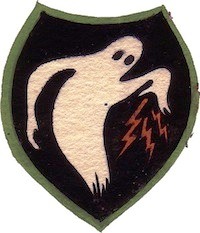
pictured: the unit patch for the
Ghost Army, which is DOPE AS FUCK
see one of the things that made WWII so
fucking nuts was the totally bizarre level of technology. Like wow we
invented the first real computer and radar but also if you wanted to
see how many troops were hanging out somewhere you had to send a dude
to fly over and take pictures manually??? this left A LOT of room for
shenanigans
so the normal method of dealing with
aerial surveillance was to cover shit with camouflage netting. Say
you’ve got an nice air base that you really don’t want any bombs
dropped on- you literally just cover that with a ludicrous amount of
netting and some fake trees and BAM now it looks like just an empty
field from the air
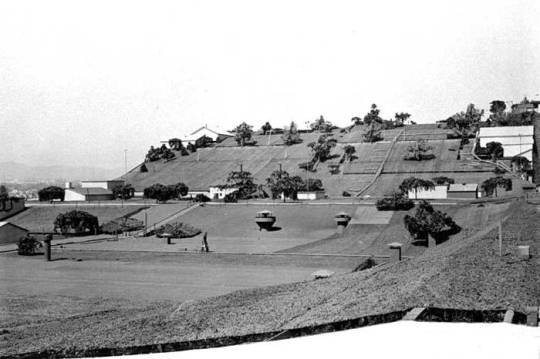
there’s a building under that weird
lump
that’s cool! That’s
really cool! But not cool enough
At some point
somebody sat down and went “hey wait. What if…what if instead of
disguising buildings and units as fields, we disguise fields as
units”
holy fucking
shit!!!
the British had
used a bunch of fake tanks and like, boxes of provisions stacked up
in tank shape and then covered with a tarp in 1942 during Operation
Bertram and it worked really well, but they didn’t have a special
unit devoted to just clowning on the Germans like that.
so the US military
decides they do want a designated clowning unit and goes out and
recruits a bunch of fucking nerds from all the art schools and makes
them into the 23rd Headquarters Special Troops aka THE
GHOST ARMY, WHY THE FUCK WOULD YOU USE ANY OTHER NAME LIKE SERIOUSLY
the ghost army’s
job was basically to go in, sidle up to a real unit, and then
basically set up a fake version of that unit while the actual unit
sneaked away to go dunk on Nazis where the Nazis weren’t expecting
them
okay time to get
into the really cool part of this story, which is HOW the ghost army
faked being a real unit:
step 1: INFLATABLE
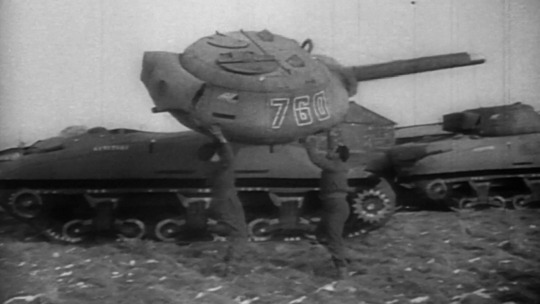
TANKS AND AIRCRAFT OH MY GOD
that’s a big ol balloon!!!
the ghost army had
a stockpile of inflatable tanks, aircraft, artillery, cars, whatever,
that they would set up and then poorly cover with camouflage
netting so from the air it looked like someone had just done a
real shit job of hiding actual materiel. They even had dummy soldiers
that they would set up to make the scene look populated, since the
ghost army itself was about 1,000 dudes regularly imitating units of 30,000 men
what’s really cool
is that visual deception was more than just the inflatable stuff
itself. If the ghost army plopped down a balloon tank, they then also
had to go out with shovels and rakes and shit to make a fake track
that a real tank would have left, because it turns out tanks are
really hard on your landscaping
step 2: “spoof
radio”
the last couple of
days before the real unit moved out, the radio operators of the ghost
army would move in. see, radio transmissions were done in Morse code,
and it turns out every radio operator has a slightly different “fist”
when typing Morse. A “fist” is basically typing style- some
people would take longer to type out certain letters or would have
pauses between groups or anything like. Anybody listening to the
radio transmissions who was skilled enough could tell different radio
operators apart from just their fist
anyway the ghost
army operators would move in and basically listen to all the real
unit’s radio transmissions until they had learned the real operators’
fists. Then they would take over radio traffic, imitating that fist
so it seemed like the real operator had never left. I forgot to make
this section funny because I was too caught up in how rad it is SORRY
step 3: making a
lot of noise
the ghost army had
special trucks fitted with huge fuck off speakers and a whole library
of stock sound effects. Once the real unit left and the fake unit
inflated, the sound trucks would come in, select a combination of
sound effects that matched the unit they were impersonating, and then
played everyone in the 15 mile radius of the speakers their fire mix
tape
step 4: fuckin
partying!!!
see the thing about
impersonating your own units is that other allied units would know
about it and might talk about it where enemy collaborators could
hear. So the ghost army had to fool the Germans but they also had to
fool their own army. Every time they impersonated a new unit,
the ghost soldiers would paint that unit’s insignia on all the fake
materiel, make fake signs with the unit’s name and colors, and sew
the unit’s patches on their own uniforms
once they were
dressed up as soldiers from the impersonated unit, the ghost army
dudes would go into town and mingle with other soldiers from actual
fighting units nearby and hang out in bars while loudly saying things
like “YES HELLO I AM DEFINITELY A REAL SOLDIER FROM THE WHATEVER
DIVISION, ABSOLUTELY FOR REAL STATIONED ON THAT HILL OVER THERE”
so anyway this
bunch of weedy American art nerds staged 20+ battlefield deceptions
between 1944 and the end of the war, sometimes fooling that Germans
so successfully that they actually got shelled
I’mma leave you
with this quote from the book “The Ghost Army of World War II” by
Rick Beyer and Elizabeth Sayles, because it’s a quote from an actual
member of the Ghost Army and that alone makes it funnier than
anything I could ever write:
On another
occasion, two Frenchmen on bicycles somehow got through the security
perimeter. Shilstone managed to halt them, but not before they had
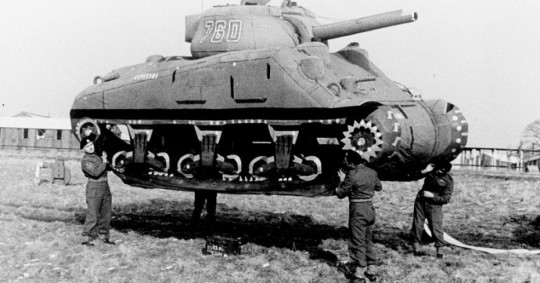
seen more than they should. “What they thought they saw was four
GIs picking up a forty-ton Sherman tank and turning it around. They
looked at me, and they were looking for answers, and I finally said
‘The Americans are very strong.‘”
This is kind of the best thing ever. Please, someone, write an AU where Steve didn’t go into active service until 1944 and was instead enlisted into this unit. I need this in my life.
On this day in 1999, the film Aimée & Jaguar was first released in its
home country of Germany. Set during World War II, the movie tells the true and
devastating love story of Lilly Wust and Felice Schragenheim, one the wife of a
respected Nazi soldier and the other a Jewish journalist hiding in plain sight at
a Nazi controlled newspaper.
The film begins in Berlin in the 1990s; two old women meet in a nursing
home, and when the narrator sweeps back in time to 1943, you know you are in
for a decades-long story that will stick with you long after the credits roll. The
foundation of Aimée & Jaguar is something we’ve all seen before:
bored housewife is swept off her feet by the charismatic and dangerous queer. However,
what makes Aimee & Jaguar stand out from the crowd of a dozen other lesbian
movies is the lingering knowledge that these were real women who actually lived
and loved in the city that was the heart of the Nazi empire; a gang of lesbian
friends all sitting around a table joking and playing cards, or a Jewish woman
in full suit and top hat waltzing around a ballroom with her lover are the type
of images that I never would have associated with 1940s Berlin before I saw
this movie. They are the type of lived experiences that have been buried under
the mythologizing of WWII-era Europe, and it is through Aimée & Jaguar that
you are able to see that, even though it was stifled under the rise of fascism,
Germany’s thriving gay culture of the 1920s and 1930s was still there, still dancing
and laughing and kissing no matter how many closed doors and curtains it was
forced to hide behind. At the beginning of the movie, I wondered why it wasn’t
titled Lily & Felice or something more obvious, but by the end I had
come to realize just how crucial Lily and Felice’s pet names were to their
relationship, and just how important sublimated identity was during this time
for lgbtq people, for Jewish people, and for any marginalized person living
under Hitler’s rule.
The real
Felice Schragenheim and Lilly Wust as pictured in Erica Fischer’s novel. The text at the bottom reads: (Left) Felice, in a photo taken by Lilly, on the Havel River, August 21, 1944. (Right) Lilly, in a photo taken by Felice, during the summer of 1944 on the balcony of Lilly’s apartment at Friedrichshaller Strasse 23.
Before the film was released, Lilly and
Felice’s story was told in novel form by Erica Fischer in her bestselling book Aimée
& Jaguar: A
Love Story, Berlin 1943, which you can check out here! Or hear the story
told through Lily’s own words in this 2001 interview with The Guardian.


 Question of Smoke