i feel like wonder woman could get away with throwing batman over her shoulder to carry him away exactly once, just because she would have the element of surprise. batman prepares for everything but there are limits. if you were batman would you ever in a million years expect a woman who is two inches shorter than you in one-inch heels to just pick you up and leave like she’s carrying a bag of sand to build a wall. like you are the victim of a cartoon caveman from the fifties. i postulate that you would not. maybe in her arms like a lumberjack’s bride, but a fireman’s carry? while he is not only conscious, but entirely capable of moving under his own power? this is the one scenario that batman never prepared for and he suffers the consequences. she could never get away with it again and so she doesn’t even try but from that moment on the possibility is always in the back of his mind. he is on alert. he wants her to try again so he can prove it won’t work this time. she never gives him the satisfaction. he can never explain to anyone how he is suffering. no one will understand. he stands on a rooftop in the rain and broods.
Every time I reread the Hunger Games trilogy I become more furious about the movie representation.
These books were about an indigenous woman (with a brain injury in book 3) living in poverty overthrowing a corrupt white government.
She was demisexual, had stomach hair, was not even remotely romantically driven (and canonically didn’t even find romance until after she had finished a revolution.)
And Peeta was disabled and physically abused as a child and they both suffered from mental health problems and the parallel between the Capitol and the ruling rich was so very transparent.
And I’m seeing fun coloured makeup in stores labeled “Capitol colours from the Hunger Games”!
These books were about the revolution of the most oppressed taking over the extravagance and elitism and decadence of the ruling class while citizens starved.
These books were a parallel to our current social dynamics, they were a call to arms. They were a battle cry for the impeding ruin of the rich white ruling class.
And the movies portrayed them as a fantasy, a romance story, a cute little tale. When the real story in the books was one of strength and upheaval and shifting paradigms and revolutions.
And like…… the death of a young Black child sparked the rebellion.
When Katniss thinks about running away in the second book it is the memory of Rue that makes her decide to stay and “cause all kinds of trouble.”
That is an indigenous woman deciding that the death of a Black child is so horrific and unacceptable that she needs to start an entire uprising about it. That is WOC solidarity.
Then again, when Katniss is talking with Peeta about not leaving he literally, canonically and verbally SAYS it’s because of Rue.
The movies did not lend enough weight to the injustice and violence that Black women face; they didn’t waste any time in deciding the rebellion came from their White Katniss’s determination to overthrow the Capitol.
The movies purposely and aggressively erased all of the racial oppression and power and dynamics that were so apparent in the books.
They made Katniss white, they made Gale white, they erased Peeta’s amputation, they seriously diminished the PTSD both of them faced (which was actually one of the more accuract accounts of PTSD I had ever read in the books), they drastically lessened the weight and importance of Rue’s death.
Anyway, fuck the movies. The books are miraculous. Right down to the respect of survival sex workers. Right down to the power imbalances of society being set in the hands of a violent old white man who has surgery to appear younger.
The author said these books was based on her interpretation of kids’ experiences in war torn Vietnam and Iraq. None of these kids were supposed to be white.
But hey everybody, remember that Hollywood wisdom says movies with non-white casts & characters aren’t popular and don’t do well at the box office
It’s almost as if they were full of shit racists using any flimsy excuse to whitewash movies
i still can’t believe that the incredibles is likely set in the 1960s
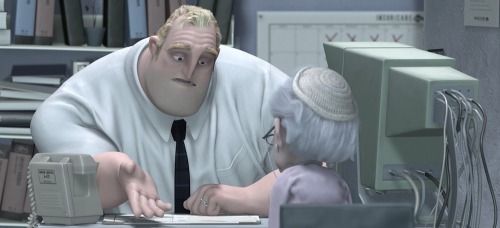
the entire film is designed with classic 50s-60s art styles, a lot of the interior design of the parr household is in 60s style, fashion is generally reminiscent of the 60s, in the beginning of the film all the photographs and video are grainy and shot in 60s style, the technology in bob’s office is very dated, when edna is going on her “no capes” rant she cites superheroes who died from cape designs and says their deaths were in the 50s, all the cars in the film have 60s models, any advanced tech we really see is seemingly kept secret from the general public, here’s a newspaper from the film:
may 16th, 1962
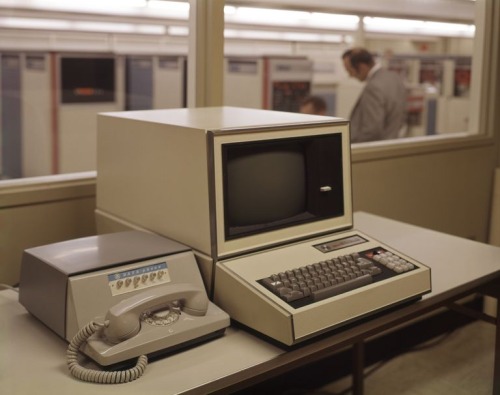
some people are saying that the technology on bob’s desk was too advanced for the 1960s but not really, in the 60s computers DID exist they were just big and bulky and small screened, which matches bob’s:
you could argue that some of the fashion isn’t very realistic to the 60s as some of the women wear pants, but women did wear pants in the 60s even if it wasn’t common. as for the mens fashion, it’s kinda spot on. the business suits with short sleeved button ups and skinny black ties, the turtlenecks, and for more dressed down looks wearing a t-shirt and jeans isn’t very unrealistic (and that little boy on the red tricycle, wearing a baseball cap, and chewing bubble gum is like classic 60s imagery)
some outfits were likely oversights and/or them not wanting the time period to be too glaring. the sequel looks like they’re going to be making the womens wardrobe fit the stereotypical 60s timeframe better, as you can see in the trailer:
the writer and director of the incredibles has even said that he based the film on classic 60s superheroes and comics like god guys please use google search, why would i lie about this
Do you ever just stop and think about how Asami Sato just rushes people when she fights? Like she sprinted towards a guy on a motorcycle. She jumped over a small wall to fight a member of the Red Lotus member. She just rushes them.
I sure do XD
I mean, she HAS to. Without bending, she can’t fight at a distance, and the longer a bender gets to move and maneuver the more dangerous they are. This badass gal knows the SAFEST way for her to fight is to close as fast as possible and take them down in one or two brutal hits.
Even more… benders are USED to fighting at a distance. Not too often do they actually land a skin-to-skin hit. Suddenly, this tall furious valkerie is right up in your grill, and you have no room to do anything, and by the time the surprise wears off you’re on the ground.
(this post is mostly an expansion on the twitter thread i did a while back, which addressed this question: why is fanfiction often blamed for harming young people in fandom? (please also read the spinoff additions to the end of the thread, which start here.)
this post deliberately does not address whether or not fandom should have particular social expectations/obligations. I think these ethical questions are complicated and require nuanced address, particularly because of how social media works these days. rather, this is my offered explanation for why fanworks are the chosen scapegoat for the cumulative harm of systemic social problems.)
Note this post is US-centric because the scapegoating of fanworks seems to come primarily from Americans in English-speaking fandom spaces.
I think that because fanworks have long been slapped with warnings of dark content (abuse, noncon/dubcon, etc) it’s difficult for me to believe they directly play a major part in setting young people up for abusive situations irl … for the most part. It’s less the fanworks themselves and more the environment in which fanworks have been presented over the last 5-8 years.
In my opinion, the sad irony is that fanworks only have the potential to cause direct harm by causing people to believe their contents are models for safe sex/relationships/etc because of the expectation that fandom is a space for education.
fanworks have been around for ages, but currently they are:
in a post 9/11 social environment where the unknown/unfamiliar is feared, critical thinking is discouraged, safety is prioritized over freedom, and censorship is treated as protection,
(but information is available in unchecked quantities that outstrips the individual’s ability to process it);
available in a viral-sharing environment featuring nigh-infinite freedom/no moderating authority and on a highly-networked, easily-searched internet;
where young people are often more expert at navigation than their guardians, and thus easily able to access content that isn’t age-appropriate/safe for them
(but being young people, they often think they’re ready for that content);
furthermore, content that is not only inappropriate for their age/maturity, but also on topics that they will never/have never received a proper, thorough education on
(because schools have their hands tied by religiously-motivated regulations and guardians have abdicated responsibility for sex ed and lack acceptance for non-straight/non-cis identities);
targeted marketing has encouraged and exacerbated existing stratification by income, age, gender, and sexual orientation; and
increasing social awareness is constantly creating tension between social tradition and social advancement, putting incredible stress on anyone who represents ‘advancement’.
On that last point, my thread and this post are particularly concerned with (perceived) women, who are burdened by both traditional and ‘progressive’ social roles:*
women are traditionally seen as child caretakers, educators, and burdened with upholding social morality as the heart of homemaking. all perceived women have to deal with this social expectation.
as agents of social advancement, those perceived as women are still burdened with educating the ignorant and being ‘good examples’, as their mistakes will be magnified as evidence that tradition is better.
*these problems are SUPER magnified by being non-white. (and I didn’t even get into the sexual expectations.)
As an isolated space, fandom – with majority women and/or afab participation – did a pretty good job of shaking off the social expectation that perceived women are educators and caretakers. but when fandom gained visibility by the move to tumblr and Google trawling tumblr content/content going viral + all the social factors above, the ‘(perceived) women as educators’ expectation came back on fandom, and with additional exacerbation:
in a culture focused on purity and prioritizing safety over freedom, disgust & feelings of shame both act like a moral compass & a safety warning. fandom’s judgement-free attitude about nsfw/kinky/horrible-irl content looks like a community of people who condone all these things as ‘safe’, if that’s how you’ve been taught to view the world.
Basically: if the people who are writing/creating this stuff are treating it as nothing to be ashamed of, it must not be dangerous. right?
Combined with the not-unusual adolescent belief that you’re ready for literally anything and know more than most adults, it’s a recipe for disaster.
fanworks often echo aspects of the source material, including aspects that are not healthy: canon romanticization of abusive relationship dynamics, for instance. Fanworks that share canon’s unhealthy features can become a form of reinforcement/seen as tacit approval of existing messages in mass media for fans who don’t have outside education to protect them.
in fact, fanworks are often (deliberately or not) ‘in dialogue’ with the existence of these kinds of harmful cliches. it’s important to view fanworks as what they frequently are: individual reactions/remixes/retakes on things in mass media and real life, created by victims/potential victims of the harm those things can cause. (viral sharing sites often separate these works from this context.)
on fandom tumblr in particular, people are consuming a cominbation of fanworks, fantasies about fictional characters that may or may not be nsfw, educational posts about safe sex / queer/lgbt history / sexual orientiations / gender identity / being a good ally / intersectionalism, and the importance of minority representation in mass media. conflating fanworks with good representation & educational content seems a natural consequence.
within fandom spaces, the expectation is that fans are enlightened on social justice issues. as victims of marginalization, or at least people who are constantly exposed to education on marginalization, we obviously know better than creators of mass media. This contributes to the attitude that fan content should be ‘better’.
Ironically, the content warnings, lack of fan culture shame, and the creators being vulnerable to negative responses together contribute to making fanworks/fan creators unusually visible examples of ‘corrupting’ content to point at and condemn.
between terrible education, a reactionary and conservative background radiation to English-speaking internet culture thanks to the US being a mess, and the fact most people are blind to social constructs that have formed their whole worldview, fanworks are getting a really bad rap.
altogether: fanworks are treated as being on par with mass media, social expectations, and culture norms in terms of the harm they can cause, even though they have comparatively little visibility and are usually created by marginalized people with little relative influence. They are reactions to mass media, social expectations, and culture norms rather than the cause of them.
however, because fanworks are easy to access without supervision, open about the content being potentially harmful, and produced by people who should ‘know better’ or are perceived as caretakers/educators, fanworks get blamed for the cumulative effect of culture/mass media/social norms. And unfortunately, because young people have formed expectations that fanworks will educate them due to those same social norms, the possibility that people will treat fanworks as models for social behavior or comprehensive guidelines to material they lack education on is increased.
–
I can’t hope to propose a comprehensive solution in this post. Taken altogether, fandom is really the tip of a large iceberg of systemic problems: sexist expectations, lack of outside education, and a reactionary cultural environment are the underlying issues.
Anything fandom can do on its own will amount to little more than a band-aid. Antis will never wipe out potentially harmful fanworks, and all the declarations by fandom members that they abdicate responsibility for educating young fandom people won’t make society less expectant of us.
the only things I know we have to do in the long run is keep fighting for real sex ed, keep warning for and flagging adult-oriented fan content, and do our best to respect each other’s taste and comfort levels. (and it would be a lie to say that I expect any of it to be easy.)
Someone else on tumblr pointed out that PASSENGERS might have been a more
meaningful movie if it was about just THE ONE person dealing with being
alone on the ship for the rest of their life. And if, to cope, they go
through and make it a point to learn everything they can about all of the other
people on the ship.
And I just keep thinking about this idea.
There are
4999 other people on that ship and what if the protagonist spent the
remainder of their life (and they do live their full life) learning about each of them.
They took an
interest in their hobbies so that they could have some sort of
connection to them.
As their sanity flexed in an effort to cope, they could have had these really involved
imaginary conversations with the crew about their interests. And by the end
of their natural life they will have known everything they could have ever known
about these other 4999 people.
…
AND THEN THE REST OF THEM WAKE UP. And they have some
90 odd years of security footage of this one crew member talking to each of them in turn. And it goes far beyond ‘I have figured out how to cook that one dish you were struggling with’ or ‘I have readTHE SILMARILLION at your suggestion and Jesus Christ I have thoughts about it.’
They actually start making connections between all of the crew.
Like ‘You like bugs! You should totally talk to Cindy! She’s an entomologist!’
Or ‘Did you know that you and Said’s grandfathers were both in the same infantry?’
Or ‘You and Jamie are both avid bee keepers and I think you need to meet.’
Or ‘I know you’re really struggling with this, but Aneesha said she went the exact same thing and I think talking to her can help.’
And because all of these crew members are watching the videos that have been individually addressed to them (Because why not? They’re colonizing. There’s not a lot yet available by way of entertainment) they sort of start talking to each other at the Protagonist’s suggestion. And within a year they are THE MOST unified interconnected colony of any of the colonies because this one crew member broke the ice for them a lifetime ago.
Several of them are engaged.
Two are about to have children named after the Protagonist.
…
AND BECAUSE EVERYONE KNOWS EVERYONE NOW they notice when one week a crew member isn’t out and about and no one can get in touch with them. So finally somebody goes to check and they find them huddled in a ball and mourning.
Because Protagonist is dead.
And the other people are like: ‘Yes. We know. This is literally the first thing we knew about them.’
But Mourner is like: ‘You don’t understand. I got to the end.’
And then everyone realizes that the mourner has basically been BURNING through all of the videos Protagonist has addressed to them and got to the last one they made to them before they died. And Protagonist left a final message for each of them.
Suddenly everyone’s having a real frank conversation with themselves about how fast they’re going through their videos and if they’re prepared to keep going at that rate and get to the end, or if they should put it off indefinitely.
And one by one, in time, each of them realizes they can’t put it off. Not only are they invested in the end, but they care enough about Protagonist to really acknowledge their death.
Each crew member does this at their own pace. It becomes a rite of passage of sorts. And Protagonist is given some sort of proper memorial so the colonists all have a place to go when their time comes to grieve.
…
BUT BEFORE EVERYONE GETS TO THE END, someone has started noticing how Protagonist treated the robots on the ship over the years. And surprise, surprise, Protagonist named all the robots too and treated them like individuals depending on their quirks. So now someone has finally solved the mystery of why droid 808 insists on being called ‘Bob,’ and why 239 knows ASL, and why the auxiliary robots are so salty about nobody ever being able to tell them apart.
Not only that, but security logs shows that the robots were about 19% more efficient when Protagonist was alive than they are now. And THE VERY SECOND the rest of the crew starts observing the same habits Protagonist used in treating these robots ALL OF THAT EFFICIENCY COMES RIGHT BACK.
Because they missed Protagonist too.
…
And things settle. Everyone thinks they’ve reached the end of Protagonist’s surprises.
…
THEN THEY ARE FINALLY ABLE TO START TRANSPORTATION BETWEEN THEMSELVES AND THE OTHER COLONIES.
And a visiting party shows up.
The visitors are surprised to see HOW WELL everyone on this colony is getting along, because, wow, people are civil where they come from but GODDAMN.
And one of these visiting members is really excited to see their sibling.
And ‘Oh, that’s so nice! Who is it?’
And then the visiting member says a name every single person on this colony knows.
The colonists have to tell them what happened to their sibling, Protagonist.
But they also HAVE to tell the sibling what knowing Protagonist MEANT to them. And what Protagonist knowing THEM, meant to them.
And it’s sad.
The colony pretty much wholesale adopts Protagonist’s sibling as a part of their family because they don’t know what else they can do to fill that void. But just in case, they give the Protagonist’s sibling THE ENTIRETY of Protagonist’s security footage. Because there is 90 years of it and that way they can carry their sibling with them for the rest of their life even if only in video.
And then the colonists think:
‘This. This was the end of Protagonist’s story. And this was a good a proper way to observe it.’
…
AND THEN ONE DAY A SHIP SHOWS UP THAT IS NOT LIKE ANY SHIP THE COLONISTS HAVE EVER SEEN.
And the people driving it aren’t human.
They speak English and passable French. They can chicken scratch Urdu, Mandarin, and Swahili.
Everyone is stunned and wants to know ‘why…?’ and ‘how…?’
And the aliens are just, like, ‘Oh. Protagonist. We ran into them while you were in space. They told us you’d be settling here and asked that we check up on you whenever we were rolling by this quadrant next.’
‘They were really nice. Taught us English. Gave us the files on a couple of your other popular languages as well just to be safe. How’s the colonizing going anyway?’
And everyone thinks back to THAT ONE MONTH of security footage where Protagonist was NIGH IMPOSSIBLE to find. And when they finally did come back to their normal routine they were really quiet and thoughtful for about a week before really getting back to themselves.
The linguists all suddenly remember that IMMEDIATELY FOLLOWING THAT REALLY WEIRD MONTH, Protagonist had a new coded language saved to their personal affects and was very insistent that they LEARN IT. ‘FOR REASONS.’
And very quietly, the entire colony makes peace with the fact that Protagonist established a very successful first contact while they were all asleep.
Because of course they did.
Ok first, I would watch this once a week, and second I would like you present to you the concept of John Boyega as the Protagonist.
So whenever i would watch movies and see The Badass Female Character fighting in various ways, something about it always bugged me. I just assumed it was internalized misogyny that made me dislike characters like black widow and Tauriel and tried to make myself like them.
Then I was rewatching Mad Max Fury Road the other day and I noticed that nothing bothered me about watching Furiosa fight and I realized the problem wasn’t watching women fight in movies that got on my nerves.
Watching the stereotypical Badass Female Character she always has these effortless moves and a cocky, sexy smirk on her face as everything is easy. Watching Furiosa, she grunted and bared her teeth. Her fighting was hard and it took effort and it hurt like fighting is supposed to. For once her fighting style wasn’t supposed to seduce the audience it was to be effective.
I wasn’t disliking these characters because they were women I was disliking that their fighting was meant to remind me they were women. High heels and shapely outfits and not showing effort or discomfort because it’s more attractive to effortlessly lift a long leather clad leg over your head rather than rugby tackle someone.
It’s the same with the Wonder Woman movie too. Fighting is hard and it takes effort, blocking bombs and bullets with a shield makes her grimace and bare her teeth with the effort it takes. She’s not flip kicking bombs she’s yelling and straining, not because she’s weak or bad at fighting but because that’s what it would be like.
I really hope we’re moving into an era of women having fighting styles designed for realism and not how hot it looks for the men in the audience.
I’m fairly certain that the people who make the “batman could make himself obsolete by using his money to solve the economic strain that drives many people to crime” posts are only familiar with Batman through Will Arnett’s spoof performance in the Lego movie, since that’s the only version of Batman I know where he isn’t hiring so many ex-convicts at his company so they have a legitimate source of income and using so much money to fund social programs that all the other bigwigs at Wayne Enterprises hate him and want him gone
Literally every version of his origin story I can remember involves him realizing that he can’t just treat the symptoms as Batman, he has to treat the root cause as Bruce Wayne. A huge part of the plot of “The Dark Knight Rises” is that his company is on the verge of bankruptcy because Bruce keeps spending all their profits on things like “clean energy” and “food and shelter for orphans.”
The opening of “Arkham City” shows him campaigning against mass incarceration because the majority of the inmates in Arkham City are not public menaces like the Joker, they’re desperate people with no other options, and Gotham should be providing them with legitimate means of stability rather than punishing them for having none.
Especially since the majority of his villains are independently wealthy people (doctors, lawyers, business executives) who are exploiting people’s desperation in order to get themselves henchmen, and the henchmen almost always have jobs with a living wage waiting for them on the other side of their sentence, and Bruce has a standing offer to pay out-of-pocket for the therapy of any of his villains whose crimes are the result of a mental illness (which Bruce is sympathetic to since he is mentally ill himself)
But what’s really damning about these posts is that a lot of them suggest Bruce should use his money to give the police the resources they need to deal with crime on their own, which makes it clear they’ve never actually consumed a piece of Batman media, since the issue with the Gotham Police is not that they’re underfunded. They have a bloated budget, they’re almost militant, and they’re so corrupt that they actually encourage crime, both violent and economic, because they’re on the payroll of the richest criminals.
Also, some of them refer to Batman as a “old rich white man’s wet dream” and I really disagree here. A story that says the only rich dude in the world who’s not a criminal drain on society is the one who spends the majority of his hefty inheritance and all his corporate profits trying to correct the imbalance that allowed him his wealth in the first place, whose staunch belief is that the best crime control policy is building a world where no one feels crime is necessary, as well as refusing to support mass incarceration or police corruption, systems which stand to benefit him financially? Batman is an old rich white man’s worst nightmare.
For a long time now, I’ve been feeling increasingly alienated by a lot of the ways in which (the shipping side of) fandom, relationship categories, and the push for queer visibility intersect. I haven’t known how to talk about it, because it seems like whichever way I turn I’m likely to step on toes; also it intersects with my own life in ways that are pretty personal. But my compulsion to get it down in words isn’t decreasing, so here goes.
The narrative tension between “sexually/romantically involved” and “something else” is the fuel that powers the shipping side of fandom. And while “something else,” in this context, can sometimes be enmity or competition or a professional relationship, a significant percentage of the time it’s close friendship, or one of the above in combination with close friendship. Inherent in the construction “sex/romance versus something else” is a bright line distinguishing one from the other: a dichotomy analogous, in ways, to male-typical Christian conversion narratives from Augustine on: I (we) was (were) something inferior (friends, heathens); then there was an event (a kiss backed with swelling music; a welcoming of Christianity into one’s heart), and I/we transmogrified into something fundamentally different—something more intense, something more meaningful, something intrinsically better and, more basically, something qualitatively distinct.Since close friendship is often the “something else” positioned on the starting side of a pair’s personal secular conversion narrative, it gets trivialized, shunted aside, cast as a pale imitation of the requited sex-romance bundle to come. This is disparaging to those incredibly precious and unique relationships that exist squarely in friend territory and also, incidentally, pretty simplistic in terms of equating sex with romance—all of which is bad enough. But more and more I feel incredibly alienated by the entire bright-line friend-versus-sex/romance construction at all, and everything it implies about the clarity and impermeability of boundaries between those categories. Like Teresa of Avila (likely the only time I will ever compare myself to her) I object to the presentation of a one-way conversion narrative. And I object to the idea of a substantive, alchemical transformation between sinner/friend and saint/lover.
Of course, discourse around this stuff gets even more complicated when queerness enters the picture, because our cultural master narrative has a long history of using close same-sex friendship as a blind to deny queer sexual desire and romance.
Writing and reading fanfic is a masterclass in characterisation.
Consider: in order to successfully write two different “versions” of the same character – let alone ten, or fifty, or a hundred – you have to make an informed judgement about their core personality traits, distinguishing between the results of nature and nurture, and decide how best to replicate those conditions in a new narrative context. The character you produce has to be recognisably congruent with the canonical version, yet distinct enough to fit within a different – perhaps wildly so – story. And you physically can’t accomplish this if the character in question is poorly understood, or viewed as a stereotype, or one-dimensional. Yes, you can still produce the fic, but chances are, if your interest in or knowledge of the character(s) is that shallow, you’re not going to bother in the first place.
Because ficwriters care about nuance, and they especially care about continuity – not just literal continuity, in the sense of corroborating established facts, but the far more important (and yet more frequently neglected) emotional continuity. Too often in film and TV canons in particular, emotional continuity is mistakenly viewed as a synonym for static characterisation, and therefore held anathema: if the character(s) don’t change, then where’s the story? But emotional continuity isn’t anti-change; it’s pro-context. It means showing how the character gets from Point A to Point B as an actual journey, not just dumping them in a new location and yelling Because Reasons! while moving on to the next development. Emotional continuity requires a close reading, not just of the letter of the canon, but its spirit – the beats between the dialogue; the implications never overtly stated, but which must logically occur off-screen. As such, emotional continuity is often the first casualty of canonical forward momentum: when each new TV season demands the creation of a new challenge for the protagonists, regardless of where and how we left them last, then dealing with the consequences of what’s already happened is automatically put on the backburner.
Fanfic does not do this.
Fanfic embraces the gaps in the narrative, the gracenotes in characterisation that the original story glosses, forgets or simply doesn’t find time for. That’s not all it does, of course, but in the context of learning how to write characters, it’s vital, because it teaches ficwriters – and fic readers – the difference between rich and cardboard characters. A rich character is one whose original incarnation is detailed enough that, in order to put them in fanfic, the writer has to consider which elements of their personality are integral to their existence, which clash irreparably with the new setting, and which can be modified to fit, to say nothing of how this adapted version works with other similarly adapted characters. A cardboard character, by contrast, boasts so few original or distinct attributes that the ficwriter has to invent them almost out of whole cloth. Note, please, that attributes are not necessarily synonymous with details in this context: we might know a character’s favourite song and their number of siblings, but if this information gives us no actual insight into them as a person, then it’s only window-dressing. By the same token, we might know very few concrete facts about a character, but still have an incredibly well-developed sense of their personhood on the basis of their actions.
The fact that ficwriters en masse – or even the same ficwriter in different AUs – can produce multiple contradictory yet still fundamentally believable incarnations of the same person is a testament to their understanding of characterisation, emotional continuity and narrative.
So I was reading this rumination on fanfic and I was thinking about something @involuntaryorange once talked to me about, about fanfic being its own genre, and something about this way of thinking really rocked my world? Because for a long time I have thought like a lawyer, and I have defined fanfiction as “fiction using characters that originated elsewhere,” or something like that. And now I feel like…fanfiction has nothing to do with using other people’s characters, it’s just a character-driven *genre* that is so character-driven that it can be more effective to use other people’s characters because then we can really get the impact of the storyteller’s message but I feel like it could also be not using other people’s characters, just a more character-driven story. Like, I feel like my original stuff–the novellas I have up on AO3, the draft I just finished–are probably really fanfiction, even though they’re original, because they’re hitting fanfic beats. And my frustration with getting original stuff published has been, all along, that I’m calling it a genre it really isn’t.
And this is why many people who discover fic stop reading other stuff. Once you find the genre you prefer, you tend to read a lot in that genre. Some people love mysteries, some people love high-fantasy. Saying you love “fic” really means you love this character-driven genre.
So when I hear people be dismissive of fic I used to think, Are they just not reading the good fic? Maybe I need to put the good fic in front of them? But I think it turns out that fanfiction is a genre that is so entirely character-focused that it actually feels weird and different, because most of our fiction is not that character-focused.
It turns out, when I think about it, I am simply a character-based consumer of pop culture. I will read and watch almost anything but the stuff that’s going to stick with me is because I fall for a particular character. This is why once a show falters and disagrees with my view of the character, I can’t just, like, push past it, because the show *was* the character for me.
Right now my big thing is the Juno Steel stories, and I know that they’re doing all this genre stuff and they have mysteries and there’s sci-fi and meanwhile I’m just like, “Okay, whatever, I don’t care about that, JUNO STEEL IS THE BEST AND I WANT TO JUST ROLL AROUND IN HIS SARCASTIC, HILARIOUS, EMOTIONALLY PINING HEAD.” That is the fanfiction-genre fan in me coming out. Someone looking for sci-fi might not care about that, but I’m the type of consumer (and I think most fic-people are) who will spend a week focusing on what one throwaway line might reveal about a character’s state of mind. That’s why so many fics *focus* on those one throwaway lines. That’s what we’re thinking about.
And this is what makes coffee shop AUs so amazing. Like, you take some characters and you stick them in a coffee shop. That’s it. And yet I love every single one of them. Because the focus is entirely on the characters. There is no plot. The plot is they get coffee every day and fall in love. That’s the entire plot. And that’s the perfect fanfic plot. Fanfic plots are almost always like that. Almost always references to other things that clue you in to where the story is going. Think of “friends to lovers” or “enemies to lovers” or “fake relationship,” and you’re like, “Yes. I love those. Give me those,” and you know it’s going to be the same plot, but that’s okay, you’re not reading for the plot. It’s like that Tumblr post that goes around that’s like, “Me starting a fake relationship fic: Ooooh, do you think they’ll fall in love for real????” But you’re not reading for the suspense. Fic frees you up from having to spend effort thinking about the plot. Fic gives your brain space to focus entirely on the characters. And, especially in an age of plot-twist-heavy pop culture, that almost feels like a luxury. “Come in. Spend a little time in this character’s head. SPEND HOURS OF YOUR LIFE READING SO MANY STORIES ABOUT THIS CHARACTER’S HEAD. Until you know them like a friend. Until you know them so well that you miss them when you’re not hanging out with them.”
When that is your story, when the characters become like your friends, it makes sense that you’re freed from plot. It’s like how many people don’t really have a “plot” to hanging out with their friends. There’s this huge obsession with plot, but lives don’t have plots. Lives just happen. We try to shape them into plots later, but that’s just this organizational fiction we’re imposing. Plot doesn’t have to be the raison d’etre of all story-telling, and fic reminds us of that.
Idk, this was a lot of random rambling but I’ve been thinking about it a lot lately.
“fanfiction has nothing to do with using other people’s characters, it’s just a character-driven *genre* that is so character-driven that it can be more effective to use other people’s characters”
yes!!!! I feel like I knew this on some level but I’ve never explicitly thought about it that way. this feels right, yep. Mainstream fiction often seems very dry to me and I think this is why – it tends to skip right over stuff that would be a huge plot arc in a fanfic, if not an entire fanfic in itself. And I’m like, “hey, wait, go back to that. Why are you skipping that? Where’s the story?” But now I think maybe people who don’t like fanfiction are going like, “why is there an entire fanfic about something that could have happened offscreen? Is anything interesting ever going to happen here? Where’s the story?”
Yes! Exactly! This!!!
This crystallized for me when I taught my first class of fanfiction to non-fic-readers and they just kept being like, “But nothing happens. What’s the plot?” and I was so confused, like, “What are you talking about? They fall in love. That’s the plot.” But we were, I think, talking past each other. They kept waiting for some big moment to happen, but for me the point was that the little moments were the big moments.
Reblogging this excellent post again since over there on @ao3commentoftheday there’s a very interesting discussion about untagged MCD, spoilery tags and importance of The Plot over trigger warnings.


 Question of Smoke