i just read an interesting comment from this post on reddit:
“Bucky was an American, disabled veteran, war hero, and senior citizen. His targets weren’t wartime combatants, they were American civilians. His handler (in TWS) was an esteemed American politician who was awarded the Nobel Peace Prize.
If something like Bucky’s situation is possible, what could happen in a world where the Avengers are put under the leash of the Accords? I mean the guy who acts as the UN representative (Ross) was the guy who created the Hulk by accident when he was trying to restart the super soldier program.
In this universe, it’s not even paranoia, it’s pattern recognition.” [x]
IF you really want to go with the demon idea—make the demons about powerlessness and alienation.
Make it so that it’s tied to Kara’s religion, too—to songs her mom sang to her when she was little, to the stories she heard growing up. To something she knows and has an intuitive sense of.
If Sam gets chosen by a demon in this moment of panic about her daughter? Make it the same for the other women.…
Women have more power and agency in Shakespeare’s comedies than in his tragedies, and usually there are more of them with more speaking time, so I’m pretty sure what Shakespeare’s saying is “men ruin everything” because everyone fucking dies when men are in charge but when women are in charge you get married and live happily ever after
I think you’re reading too far into things, kiddo. Take a break from your women’s studies major and get some fresh air.
Right. Well, I’m a historian, so allow me to elaborate.
One of the most important aspects of the Puritan/Protestant revolution (in the 1590’s in particular) was the foregrounding of marriage as the most appropriate way of life. It often comes as a surprise when people learn this, but Puritans took an absolutely positive view of sexuality within the context of marriage. Clergy were encouraged to lead by example and marry and have children, as opposed to Catholic clergy who prized virginity above all else.Through his comedies, Shakespeare was promoting this new way of life which had never been promoted before. The dogma, thanks to the church, had always been “durr hburr women are evil sex is bad celibacy is your ticket to salvation.” All that changed in Shakespeare’s time, and thanks to him we get a view of the world where marriage, women, and sexuality are in fact the key to salvation.
The difference between the structure of a comedy and a tragedy is that the former is cyclical, and the latter a downward curve. Comedies weren’t stupid fun about the lighter side of life. The definition of a comedy was not a funny play. They were plays that began in turmoil and ended in reconciliation and renewal. They showed the audience the path to salvation, with the comic ending of a happy marriage leaving the promise of societal regeneration intact. Meanwhile, in the tragedies, there is no such promise of regeneration or salvation. The characters destroy themselves. The world in which they live is not sustainable. It leads to a dead end, with no promise of new life.
And so, in comedies, the women are the movers and shakers. They get things done. They move the machinery of the plot along. In tragedies, though women have an important part to play, they are often morally bankrupt as compared to the women of comedies, or if they are morally sound, they are disenfranchised and ignored, and refused the chance to contribute to the society in which they live. Let’s look at some examples.
In Romeo and Juliet, the play ends in tragedy because no-one listens to Juliet. Her father and Paris both insist they know what’s right for her, and they refuse to listen to her pleas for clemency. Juliet begs them – screams, cries, manipulates, tells them outright I cannot marry, just wait a week before you make me marry Paris, just a week, please and they ignore her, and force her into increasingly desperate straits, until at last the two young lovers kill themselves. The message? This violent, hate-filled patriarchal world is unsustainable. The promise of regeneration is cut down with the deaths of these children. Compare to Othello. This is the most horrifying and intimate tragedy of all, with the climax taking place in a bedroom as a husband smothers his young wife. The tragedy here could easily have been averted if Othello had listened to Desdemona and Emilia instead of Iago. The message? This society, built on racism and misogyny and martial, masculine honour, is unsustainable, and cannot regenerate itself. The very horror of it lies in the murder of two wives.
How about Hamlet? Ophelia is a disempowered character, but if Hamlet had listened to her, and not mistreated her, and if her father hadn’t controlled every aspect of her life, then perhaps she wouldn’t have committed suicide. The final scene of carnage is prompted by Laertes and Hamlet furiously grappling over her corpse. When Ophelia dies, any chance of reconciliation dies with her. The world collapses in on itself. This society is unsustainable. King Lear – we all know that this is prompted by Cordelia’s silence, her unwillingness to bend the knee and flatter in the face of tyranny. It is Lear’s disproportionate response to this that sets off the tragedy, and we get a play that is about entropy, aging and the destruction of the social order.
There are exceptions to the rule. I’m sure a lot of you are crying out “but Lady Macbeth!” and it’s a good point. However, in terms of raw power, neither Lady Macbeth nor the witches are as powerful as they appear. The only power they possess is the ability to influence Macbeth; but ultimately it is Macbeth’s own ambition that prompts him to murder Duncan, and it is he who escalates the situation while Lady Macbeth suffers a breakdown. In this case you have women who are allowed to influence the play, but do so for the worse; they fail to be the good moral compasses needed. Goneril, Regan and Gertrude are similarly comparable; they possess a measure of power, but do not use it for good, and again society cannot renew itself.
Now we come to the comedies, where women do have the most control over the plot. The most powerful example is Rosalind in As You Like It. She pulls the strings in every avenue of the plot, and it is thanks to her control that reconciliation is achieved at the end, and all end up happily married. Much Ado About Nothing pivots around a woman’s anger over the abuse of her innocent cousin. If the men were left in charge in this play, no-one would be married at the end, and it would certainly end in tragedy. But Beatrice stands up and rails against men for their cruel conduct towards women and says that famous, spine-tingling line – oh God, that I were a man! I would eat his heart in the marketplace. And Benedick, her suitor, listens to her. He realises that his misogynistic view of the world is wrong and he takes steps to change it. He challenges his male friends for their conduct, parts company with the prince, and by doing this he wins his lady’s hand. The entire happy ending is dependent on the men realising that they must trust, love and respect women. Now it is a society that is worthy of being perpetuated. Regeneration and salvation lies in equality between the sexes and the love husbands and wives cherish for each other. The Merry Wives of Windsor – here we have men learning to trust and respect their wives, Flastaff learning his lesson for trying to seduce married women, and a daughter tricking everyone so she can marry the man she truly loves. A Midsummer Night’s Dream? The turmoil begins because three men are trying to force Hermia to marry someone she does not love, and Helena has been cruelly mistreated. At the end, happiness and harmony comes when the women are allowed to marry the men of their choosing, and it is these marriages that are blessed by the fairies.
What of the romances? In The Tempest, Prospero holds the power, but it is Miranda who is the key to salvation and a happy ending. Without his daughter, it is likely Prospero would have turned into a murderous revenger. The Winter’s Tale sees Leontes destroy himself through his own jealousy. The king becomes a vicious tyrant because he is cruel to his own wife and children, and this breach of faith in suspecting his wife of adultery almost brings ruin to his entire kingdom. Only by obeying the sensible Emilia does Leontes have a chance of achieving redemption, and the pure trust and love that exists between Perdita and Florizel redeems the mistakes of the old generation and leads to a happy ending. Cymbeline? Imogen is wronged, and it is through her love and forgiveness that redemption is achieved at the end. In all of these plays, without the influence of the women there is no happy ending.
The message is clear. Without a woman’s consent and co-operation in living together and bringing up a family, there is turmoil. Equality between the sexes and trust between husbands and wives alone will bring happiness and harmony, not only to the family unit, but to society as a whole. The Taming of the Shrew rears its ugly head as a counter-example, for here a happy ending is dependent on a woman’s absolute subservience and obedience even in the face of abuse. But this is one of Shakespeare’s early plays (and a rip-off of an older comedy called The Taming of a Shrew) and it is interesting to look at how the reception of this play changed as values evolved in this society.
As early as 1611 The Shrew was adapted by the writer John Fletcher in a play called The Woman’s Prize, or The Tamer Tamed. It is both a sequel and an imitation, and it chronicles Petruchio’s search for a second wife after his disastrous marriage with Katherine (whose taming had been temporary) ended with her death. In Fletcher’s version, the men are outfoxed by the women and Petruchio is ‘tamed’ by his new wife. It ends with a rather uplifting epilogue that claims the play aimed:
To teach both sexes due equality
And as they stand bound, to love mutually.
The Taming of the Shrew and The Tamer Tamed were staged back to back in 1633, and it was recorded that although Shakespeare’s Shrew was “liked”, Fletcher’s Tamer Tamed was “very well liked.” You heard it here folks; as early as 1633 audiences found Shakespeare’s message of total female submission uncomfortable, and they preferred John Fletcher’s interpretation and his message of equality between the sexes.
So yes. The message we can take away from Shakespeare is that a world in which women are powerless and cannot or do not contribute positively to society and family is unsustainable. Men, given the power and left to their own devices, will destroy themselves. But if men and women can work together and live in harmony, then the whole community has a chance at salvation, renewal and happiness.
In the immortal words of the bard himself: fucking annihilated.
instead of reporting the murder, i would like to help you bury thE BODY CAUSE DAAMN
Reporter in the Marvel unviverse: Anthony Stark, well-known as a generous philanthropist, the CEO of Stark Industries, and his alter-ego “Iron Man,” under fire today after a controversial video he posted to his personal Vine account went viral. The short footage showed Stark in the passenger seat of a car, driving by an anti-homosexual rally, repeatedly shouting “I love sucking [expletive for male genitalia]” out of the open window.
A+ Concept, I love it, I’m dying, it’s too good.
It becomes the hottest new meme throughout the US. Every single time there’s some homophobic rally, Hell, every time there’s a rally held by homophobes whether or not the rally was ABOUT homophobia there’s now teens doing drive-by’s being like “Ahem, this one is for Tony Stark – I LOVE SUCKING [expletive for male genitalia]”. The meme keeps escalating as people find newer and funnier ways to bleep out what they are saying in real time and on Vine. The most popular way? The sound of a repulser charging up.
The whole thing drives homophobes crazy. They hate it so much, it literally has some people trying to create their own counter meme (”I love sucking UP TO JESUS”) that goes very very badly (exactly how you’d expect). So, out of options, they try to sue Tony.
Everybody should know better than to sue Tony.
His lawyers tear them apart. There’s an unholy grin on Tony’s face during the entire publicized case – he’s in a rainbow suit. He’s in rainbow shades. He’s wearing a harness over his suit and his shoes literally leave glitter footprints everywhere he goes. His tie says “I love sucking [REPULSER NOISE]”. Twitter goes nuts. A still of Tony from the trial, one where he is sarcastically blowing pink glitter into the face of a woman trying to hit him with a picket sign, becomes a reaction image nobody can resist. You wanna represent how tired you are of homophobic comments? That’s your image. It’s usually coupled by one of Rhodey in the background, military dress uniform smeared in glitter and a blatant glittery kiss mark pressed to his cheek, staring at the ceiling and praying for death.
Listen this is the best addition to my post and im both writing this into a fic and drawing fan art for it @purgatoryandme
I’m pretty sure that if you put this in front of RDJ he would provide us with actual footage of these things.
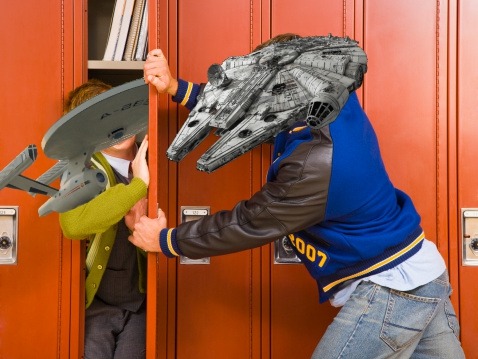
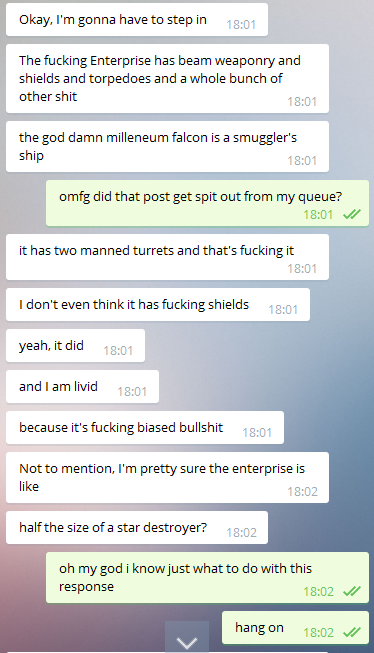
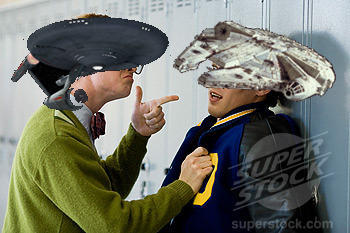
“the millenium falcon would wipe out the enterprise in seconds” lmao the enterprise is just an innocent science class floating thru space…. all they wanna do is look at some rocks… kiss an alien…. find some space plants….. why would you fight that its not a battleship theyre just nerds…… leave them olone
A friend of mine saw this and brought up some interesting arguments
so, in other words,
Pretty much.
here have some size comparison
Who wins in a fight, a fully staffed Navy research vessel or your local weed man and his best friend in their souped up VW Bus?
You’ve said in the past that Bruce Wayne having a job a job program for criminals was out of character. And even just watching the animated series again, I don’t think I agree. He has wanted to help people, even criminals, many times. Harley Quinn is a big one. Jason Todd tried to steal his tires and might have been able to get away with it. There’s Two-Face as well. Bats may not have the same views as, Nightwing, but to say he’s all about Tomas Hobbs and nothing else is missing some nuance.
It’s not nuance. The issue is that these characters have passed through the hands of many writers. That’s not a criticism of your position, per se.
You’re not wrong. Take Adam West’s Batman, and you have a character who truly looks for the best in everyone. Scattered through the years there have been a lot of truly altruistic versions presented. The key word there is, “versions.”
These are different writers takes on the character. We exist in a world where one set of writers looked at the character and created a lighthearted romp where the greatest foes he faces are lovable (if dangerous) buffoons. And another set of writers turned him, literally, into a vampire, who preys on the unwary. This can make life really tricky when you’re trying to offer up a concise critique of a character like this. It’s not just Batman by the way. Many comic book superheroes, and even most mythological figures suffer from this.
Now, obviously, if you’re wanting to talk about something like Thor, you can pick from a vast array of different, conflicting, sources, and (to some extent) chose the scope of your examination. The scope is actually pretty important. Do you look at the modern interpretations or a specific subset, (like “Thor in video games”), do you look at the actual myth, or the changes to the figure’s presentation over time as cultural and other factors changed? Do you intersect them with something else, for example, looking at “how Norse mythology interconnects with Arthurian myth.”
Modern franchise characters offer some similar options. You can look at Batman in specific eras, under certain writers, or how the character reflected changing social trends over time. In some cases you can even splice off specific pieces, such as reboots or alternate versions, and analyze those examples.
Fortunately, Batman makes this somewhat easy. Most of the time, the character is fairly consistent but there’s always going to be stuff like Stephanie Brown or Jean-Paul Valley that is not, and breaks character on his behavior. Batman hiring a brainwashed assassin and putting him in a powered armor batsuit was a fixture in the 90s in Knightfall after Bain broke Batman’s spine. We also have Batman killing the teenage girlfriend of Tim Drake through neglect after taking her on as Tim’s replacement and trying to use that event as a teachable moment. (See also, Batman: War Games.) DCUO’s Bats, who often sounds like he’s in the middle of a nervous breakdown while handing out quests to a number of nascent MMO heroes might be another.
Consider this, Grant Morrison, Alan Moore, Frank Miler, Mark Millar, Geoff Johns, Jeff Loeb, Chuck Dixon, Bruce Timm, Garth Ennis, Gail Simone, and many, many more have all written for Batman either in his own books or in other comic incarnations. If you haven’t been paying attention, these writers all have vastly different approaches and outlooks when it comes to presenting their characters. Grant Morrison honestly believes that Batman snaps and kills the Joker at the end of “The Killing Joke”, and he presents this as objective fact. Alan Moore, who wrote “The Killing Joke” thinks Grant Morrison is a moron. We haven’t even gotten discrepancies with the way Batman is presented on film. Remember, Batman and Robin is the film adjacent to Batman Begins, they’re both technically canon. Do you imagine Christian Bale grew up to be George Clooney or Adam West? The Adam West Batman is one of Batman’s most famous versions. There are lots of different versions of Batman to choose from.
As a fan, you might pick and choose your canon but many of the versions which don’t appeal to you are just as valuable from an analytical and critical perspective. So, keep that in mind as we move forward.
I did not say that it was out of character for Batman to seek to redeem people. The issue here is the methodology. At the core of Batman, you have a guy who dresses up as a bat to scare criminals into line and when that fails, he resorts to violence. I mean, at the extreme end, we’re talking about a character who kept a yellow power ring around, “just in case.” Except, sometimes, with some writers, he abandons this entire philosophy when convenient.
At this point, I should probably step back and abstract Hobbes a bit.
Thomas Hobbes wasn’t saying that it was impossible to govern, or that people couldn’t be productive members of society. He simply argued that, if left to their own devices, people suck. That they will do whatever they want to one another, unless kept in line somehow. That’s Batman; people suck, and the only reason they follow the law is because they’re afraid of what could happen if they don’t.
What’s not (usually) Batman, is Hobbes answer. He argued that the way to “deal” with people was to form communities, bound together by a social contract. While this is somewhat reflected by Bats, it’s not usually articulated as such. You can see this a lot more clearly articulated with the Adam West era stuff. While being one of the most optimistic versions of the character, he’s also, very strongly arguing that social structures need to be adhered to for the good of all. It’s still Hobbes’s commonwealth, just not how you usually think about Batman.
With that said, as cynical as Hobbes is about human nature, the overall tone of the Leviathan isn’t nearly as bleak. He is arguing that people can transcend, their state of nature. Put simply, “people suck, but they can be better.” He then goes into excruciating detail how he thinks that’s possible.
So, I said Bats’ outreach programs were out of character, and I stand behind that.
Let’s talk about the personal stuff. His relationships with Jason Todd, Harvey Dent, Stephanie Brown, Damion… those are consistent. They’re not completely out of character, though I have to wonder about Jason. The Red Hood murdering people with guns goes against everything Batman supposedly stands for, but DC has embraced Jason back into the Batfamily when he’d kick Damien out for doing the same thing… let’s move on.
Bats’ is forming, or trying form, a community. Dent is outside of that, but Bats desperately wants to believe reform is possible and (re)include him. This is arguably true with several of his villains. He does believe they can be reformed. That’s not in conflict with Hobbes. Hobbes believed that people could be better, and Bats follows that ideal. The issue is the exceptions he makes.
Most of the outreach programs Bruce Wayne runs build off of an idea that all someone needs to succeed is a little help. That normally, people are decent, and that when someone gets out of line, it’s a product of other factors pushing them to behave in that way. That’s not Hobbes. This is Superman. Superman believes that people are, by nature, decent. That they are driven to do bad things, either because they’ve become misguided, or because they’re forced to.
Now, the irony in this is that Batman is in a far better position to affect change from Superman’s outlook. He has the resources to engage in civic works. He could put money into Gotham in ways that would actually reduce crime and corruption. He could improve the city he lives in. This is the legacy of Thomas Wayne; a man trying to make Gotham a better place through strategic philanthropy. Bats doesn’t. At my most generous, I’d be inclined to chalk this stuff up as an element of his cover and as such, in-character. Because rich celebrities throw money at charity, Bruce Wayne does. And, there’s a potential to write this stuff off like that. It’s not something Bats believes in, but he does it to keep public opinion on Bruce’s side.
There’s probably something to be said, in the vein of Watchmen‘s thesis: You can’t really make the world a better place by punching muggers. It just doesn’t work. The problem is, that’s Batman’s plan. Beatings will continue until morale improves. At the same time Gotham is a complete mess, much like Watchmen‘s New York. To be fair, this is not an intentional correlation. Bats needs muggers to punch, so Gotham needs to be a hell hole.
When you’re writing, it’s very important to remember that you and your characters are different people. They (probably) have a different philosophical outlook from you. At that point, simply doing something because it would be nice, or because you want to is insufficient justification. It needs to be something your character would do. You need to justify their decision, at least to yourself; check that it is consistent with how they view their world.
When you are analyzing, it is equally important to asses the ideology a work, and its characters. Translating that to the author’s ideology can be tricky, even if you know what you’re doing. Understanding the ideology of a character comes from looking at their words and actions. Finding idiosyncrasies and discrepancies is a vital step in determining the nature of that character. Writers often look for behavior that may be considered out of character, because they are attempt to assess the work. It’s a literary acid bath. This isn’t malicious, it’s not trying something you love. It’s a writer looking at a piece and trying to learn from it. Eventually, it’s something you need to do as well, to grow.
Also, you can love something stupid. You can love something that doesn’t make any sense. There’s no accounting for quality. I’ve watched some terrible movies that I’m still quite fond of. But, it is kind of important, to be honest with yourself. Fandom can constrain your growth as an artist. You love a thing, and that’s good, but then you let that stake out your borders. Don’t let that happen.
One of the many things i love about the PR movie was that neither of the girls were reduced to being damsels-in-distress during the third act, something that most action movies do.
In fact, Trini and Kim were the ones who got to show off the most after getting their powers: Kim being the only one who landed smoothly during the jump over the cliff, Trini and Kim kicking Zack and Jason’s ass during training, that iconic flirt-fight over the doughnut, fighting back-to-back against the putty simulations, and Trini hitting Rita with the final blow.
On another note, the scenes where the boys shined the most weren’t related to battles. Billy was shown to be smart enough to find the crystal’s location, it was Zack’s idea to actually get to know the others and opened up first about himself, and Jason became a leader who wanted to take the responsibility of saving the world and being there for his team seriously (comforting Kim and admitting that his recklessness cost them Billy), as opposed to the boy who pulled an immature prank and let his team down.
If Marvel is humans becoming gods, DC is gods becoming human. And this is that done right. This reminded me of what’s wonderful about DC and why its characters are still timeless. When done correctly, it blends myth with reality, the ordinary with the extraordinary, mortal with immortal. It’s the closest we have to current Greek mythology. It’s honest. It’s powerful. It lasts forever. This is the movie that made me remember why I love DC in the first place.
Whenever I look back on the early episodes of Avatar: the Last Airbender, I realize that Iroh was probably acting a little ridiculous on purpose. He knows that Zuko still has fresh emotional wounds from his cruel, uncompromising father and sadistic sister, and the one source of softness and warmth in his life, his mother, is long gone. Iroh always tried to be a friend to Zuko, but now that his nephew has been scarred and banished, he tries to be goofy and funny and carefree so desperately hard because all he wants is for Zuko to smile and relax again. If making a fool out of himself is what he has to do, he’d do it a hundred times over.
how dare you give me iroh feels all these years later
that, and it gives him cover to slow things down.
he doesn’t want to capture the Avatar, but he can’t tell Zuko that; he needs time to help his nephew get out of the mindset Ozai’s abuse taught him.
nobody’s going to listen to him if he just tells them to stop – it’s too blatant a betrayal of the Fire Lord’s wishes – but he can play the buffoon; when they get too close, he can lose a piece of his pai sho set and delay the entire operation to replace it.
because he’s a loving uncle, and this is what Zuko needs on that level; but he’s also a genius strategist and an experienced conspirator, and this serves his purposes on a few levels
there’s even a pretty damn direct implication that he’s doing this deliberately. it’s easy to miss at the time, because you don’t have the context, but that first time we see Iroh delay Zuko and the soldiers chasing Aang? it is, as I mentioned, when he loses a piece of his pai sho set, only to realise he’d been carrying it all along
specifically, it’s the White Lotus tile – the one that gave its name to the order of benevolent meddlers he’s secretly been a member of this whole time. there’s no way that’s a coincidence.
Pretty sure I’ve said this before, but Uncle Iroh is possibly the most brilliantly sophomoric character ever written.
“There comes a point where Susan, who was the older girl, is lost to Narnia because she becomes interested in lipstick. She’s become irreligious basically because she found sex. I have a big problem with that.” – JK Rowling
Can we talk about Susan’s fabulous adventures after Narnia? The ones where she wears nylons and elegant blouses when she wants to, and short skirts and bright lipstick when she wants to, and hiking boots and tough jeans and big men’s plaid shirts when she feels like backpacking out into the mountains and remembering what it was to be lost in a world full of terrific beauty— I know her siblings say she stops talking about it, that Susan walks away from the memories of Narnia, but I don’t think she ever really forgot.
I want to read about Susan finishing out boarding school as a grown queen reigning from a teenaged girl’s body. School bullies and peer pressure from children and teachers who treat you like you’re less than sentient wouldn’t have the same impact. C’mon, Susan of the Horn, Susan who bested the DLF at archery, and rode a lion, and won wars, sitting in a school uniform with her eyebrows rising higher and higher as some old goon at the front of the room slams his fist on the lectern.
Susan living through WW2, huddling with her siblings, a young adult (again), a fighting queen and champion marksman kept from the action, until she finally storms out against screaming parents’ wishes and volunteers as a nurse on the front. She keeps a knife or two hidden under her clothes because when it comes down to it, they called her Gentle, but sometimes loving means fighting for what you care for.
She’ll apply to a women’s college on the East Coast, because she fell in love with America when her parents took her there before the war. She goes in majoring in Literature (her ability to decipher High Diction in historical texts is uncanny), but checks out every book she can on history, philosophy, political science. She sneaks into the boys’ school across town and borrows their books too. She was once responsible for a kingdom, roads and taxes and widows and crops and war. She grew from child to woman with that mantle of duty wrapped around her shoulders. Now, tossed here on this mundane land, forever forbidden from her true kingdom, Susan finds that she can give up Narnia but she cannot give up that responsibility. She looks around and thinks I could do this better.
I want Susan sneaking out to drink at pubs with the girls, her friends giggling at the boys checking them out from across the way, until Susan walks over (with her nylons, with her lipstick, with her sovereignty written out in whatever language she damn well pleases) and beats them all at pool. Susan studying for tests and bemoaning Aristotle and trading a boy with freckles all over his nose shooting lessons so that he will teach her calculus. Susan kissing boys and writing home to Lucy and kissing girls and helping smuggle birth control to the ladies in her dorm because Susan Pevensie is a queen and she understands the right of a woman to rule over her own body.
Susan losing them all to a train crash, Edmund and Peter and Lucy, Jill and Eustace, and Lucy and Lucy and Lucy, who Susan’s always felt the most responsible for. Because this is a girl who breathes responsibility, the little mother to her three siblings until a wardrobe whisked them away and she became High Queen to a whole land, ruled it for more than a decade, then came back centuries later as a legend. What it must do to you, to be a legend in the body of a young girl, to have that weight on your shoulders and have a lion tell you that you have to let it go. What is must do to you, to be left alone to decide whether to bury your family in separate ceremonies, or all at once, the same way they died, all at once and without you. What it must do to you, to stand there in black, with your nylons, and your lipstick, and feel responsible for these people who you will never be able to explain yourself to and who you can never save.
Maybe she dreams sometimes they made it back to Narnia after all. Peter is a king again. Lucy walks with Aslan and all the dryads dance. Maybe Susan dreams that she went with them— the train jerks, a bright light, a roar calling you home.
Maybe she doesn’t.
Susan grows older and grows up. Sometimes she hears Lucy’s horrified voice in her head, “Nylons? Lipstick, Susan? Who wants to grow up?” and Susan thinks, “Well you never did, Luce.” Susan finishes her degree, stays in America (England looks too much like Narnia, too much like her siblings, and too little, all at once). She starts writing for the local paper under the pseudonym Frank Tumnus, because she wants to write about politics and social policy and be listened to, because the name would have made Edmund laugh.
She writes as Susan Pevensie, too, about nylons and lipstick, how to give a winning smiles and throw parties, because she knows there is a kind of power there and she respects it. She won wars with war sometimes, in Narnia, but sometimes she stopped them before they began.
Peter had always looked disapprovingly on the care with which Susan applied her makeup back home in England, called it vanity. And even then, Susan would smile at him, say “I use what weapons I have at hand,” and not explain any more than that. The boy ruled at her side for more than a decade. He should know better.
Vain is not the proper word. This is about power. But maybe Peter wouldn’t have liked the word “ambition” any more than “vanity.”
Susan is a young woman in the 50s and 60s. Frank Tumnus has quite the following now. He’s written a few books, controversial, incendiary. Susan gets wrapped up in the civil rights movement, because of course she would. It’s not her first war. All the same, she almost misses the White Witch. Greed is a cleaner villain than senseless hate. She gets on the Freedom Rider bus, mails Mr. Tumnus articles back home whenever there’s a chance, those rare occasions they’re not locked up or immediately threatened. She is older now than she ever was in Narnia. Susan dreams about Telemarines killing fauns.
Time rolls on. Maybe she falls in love with a young activist or an old cynic. Maybe she doesn’t. Maybe Frank Tumnus, controversial in the moment, brilliant in retrospect, gets offered an honorary title from a prestigious university. She declines and publishes an editorial revealing her identity. Her paper fires her. Three others mail her job offers.
When Vietnam rolls around, she protests in the streets. Susan understands the costs of war. She has lived through not just the brutal wars of one life, but two.
Maybe she has children now. Maybe she tells them stories about a magical place and a magical lion, the stories Lucy and Edmund brought home about how if you sail long enough you reach the place where the seas fall off the edge of the world. But maybe she tells them about Cinderella instead, Sleeping Beauty, Rapunzel, except Rapunzel cuts off her own hair and uses it to climb down the tower and escape. The damsel uses what tools she has at hand.
A lion told her to walk away, and she did. He forbade her magic, he forbade her her own kingdom, so she made her own.

 Question of Smoke