i just read an interesting comment from this post on reddit:
“Bucky was an American, disabled veteran, war hero, and senior citizen. His targets weren’t wartime combatants, they were American civilians. His handler (in TWS) was an esteemed American politician who was awarded the Nobel Peace Prize.
If something like Bucky’s situation is possible, what could happen in a world where the Avengers are put under the leash of the Accords? I mean the guy who acts as the UN representative (Ross) was the guy who created the Hulk by accident when he was trying to restart the super soldier program.
In this universe, it’s not even paranoia, it’s pattern recognition.” [x]
Tag: interesting
People in badly written fantasy stories will usually talk about the major historical events of their world and how magic has affected the lives of everyone, but ask a person in the real world to describe the effects of WWI and the invention of the combustion engine on modern life and they’d probably couldn’t tell you.
Broke: every character seems to know everything about the history and lore of the world
Woke: most characters can’t tell you much besides the basics but there are some that can tell you more complete but specific parts
H Y P E R W O K E: Every character tells you a wildly different version of the past and what effects it has on the present, ranging from the government is an imperialist, colonizing body obsessed with power to the one true ruler was sent by the gods and has smote down anyone who got in his way to “Oh you mean Jeff, the quote unquote tyrant of the west? I knew that guy! He was alright, never did anything wrong really just wanted some soup.” And there’s no way to tell what actually happened
I like your thinking
Here’s a cool trick to see if a man actually respects you: try disagreeing with him
A friend of mine did something with online dating where, before meeting a person, she’d say no to something minor without a reason for the no. For example: “No, I don’t want to meet at a coffee shop, how about X?”, or “No, not Wednesday”, or “No, I don’t want to recognize each other by both wearing green shirts”. She said how the potential dates reacted was a huge indicator of whether she actually wanted to meet them, something I readily believe.
I’ve mentioned this to a few people and sometimes I get very annoyed and incredulous responses from guys about how are they supposed to know that it’s a test if the girl is being unreasonable? How are they supposed to know that and let her have her way? I find it difficult to explain that if you find it unreasonable for someone to have a preference of no consequence which they don’t feel the need to explain, then you are the one being unreasonable. You can decide for yourself that it sounds flaky and you don’t want to date her, but you don’t have a right to know and approve all of her reasons for things in order to deign to respect that she said no about it. Especially in the case of someone you haven’t even fucking met yet.
The point isn’t to know it’s a test, the point is that if you would only say “yes” if you knew it was a test, then what if it’s not a test, but because she hates coffee shops, or because she’s attending a funeral Wednesday and doesn’t know you well enough to want to share that, or whatever else? Because if you’re making rules for when other people can have preferences and not explain why… yeah, that is a thing they can reasonably want to avoid.
a while back i mentioned this very method as a way of testing a new friendship, and got some pushback from all genders. toxic people exist in every category, and their response to an unexplained refusal will out them every time.
i mean, i’m sure some of those objecting were simply idealists who found the notion of testing a new friend unpleasant. but mostly it was the “but what if it’s unreasonable” objection. my dudes, that is the damn point.
the most fucked up thing about married straight couples in paranormal reality shows is that the husband is almost always the skeptic and the wife will be like terrified to exist in her own home and she’ll beg her husband to believe her and she’ll be crying every night and he’ll straight up look at the camera and be like “I don’t know I guess I just thought she was imagining things.”
like this is beyond belief in ghosts what it comes down to is one member of these couples was so distressed they were in tears nightly or at least weekly, BEGGING their partner to listen to them, and their partner was like “whatever this’ll blow over.”
how does your relationship survive that?? how are these people still together?? if my wife came into the room crying and told me she’d seen bill watterson, author of acclaimed comic calvin and hobbes, manifest in our kitchen and tell her he didn’t like our wallpaper, I’d like. obviously have some questions. but I’d fucking address her distress and take steps to make her feel better lmao???
these husbands are all garbage and they feel justified bc they weren’t the “crazy one” who believed in ghosts.
they were the good, logical, “sane” spouse who did rational and good things like, completely and purposefully ignore their partners’ growing and life-altering distress for months.
I know this seems like such a niche topic to get into but I grew up in an old town where everyone has one or two ghost stories, and it’s almost always wives telling them while their husbands chuckle and shake their heads throughout the entire story.
It doesn’t matter whether they believe in ghosts or not. What it is is one adult recounting experiences they not only firmly believe to have happened one way, but which have profoundly affected their lives, and the other adult literally publicly laughing at them “hahaha, women and their imaginations, you know?”
Both possibilities shock me but don’t really come as a surprise: the husband literally thinks his wife is such a child that she “imagined” these experiences like a backyard game for elementary schoolers, or the husband believes his wife apparently idk?? hallucinated but it’s not a big deal and we don’t need to have a discussion about her health and whether she feels safe and happy in her home because again. silly women and their apparent hallucinations you know???
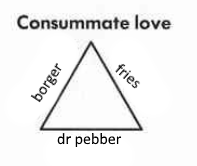
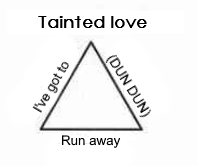
whenever i’m talking to someone and they tell me about something that happened to them i always tell them about something that happened to me that’s similar to what happened to them. i do it as kind of a “oh hey yeah this happened to me so i can relate to what you’re going through” but i’m always afraid it comes out as “oh yeah well this happened to me so clearly i have it tougher than you” or “i’m done talking about you let’s talk about me”
i swear i don’t mean it like that……..
I run into this a lot with my job – so instead of telling the whole story I say something like, “Oh my gosh, I had something REALLY similar happen. What did you do after that??” And I’ve found that works. Usually they explain and then ask, “So what happened to you?” And then you’re invited to share, and the formula for conversing continues on. 🙂
of all the tumblr posts i’ve read, this one is going to change my life the fastest lol.
Thanks to both the OP for posting a thing that so many of us do, and the responder who gave us a better way to do it. You’re doing the lord’s work, my friend!
Fun fact: there isn’t anything wrong with you if you do what OP is describing.
Deborah Tannen’s work focuses on different conversational styles — the sets of behavioral norms and expectations that we bring with us to conversations. In one of her earlier articles, she describes two conflicting conversational styles that exist in the US.
One, which she (perhaps inaccurately) dubs “New York Jewish conversational style,” is based on the principle of building camaraderie with one’s interlocutor. The other, which she doesn’t really name but which we could call “mainstream American conversational style,” is based on the principle of not imposing on one’s interlocutor.
Each conversational style has its own behavioral norms. Mainstream American conversational style involves things like asking your interlocutor questions about him/herself and waiting until your interlocutor is clearly finished speaking until you say something. These demonstrate a focus on one’s interlocutor and a clear resistance to imposing. NYJ conversational style involves things like conversational overlaps — speaking at the same time as one’s interlocutor — and “swapping stories.” These demonstrate a high level of engagement with one’s interlocutor. Conversationalists using the mainstream American style make space for each other; conversationalists using the New York Jewish style carve out their own space.
Each of these conversational styles works well when the two people conversing have the same style. Imagine two friends meeting for drinks after work:
“Oh, hello! How was your trip here?”
“Oh, it was awful. There was so much traffic on the turnpike.”
“That’s terrible.”
“I know. How was your trip?”
“Well, there was an accident on the bridge.”
“Oh no! Was there a big backup?”
“Yeah, pretty big.”“Oh, hi!”
“Hey! Ugh, sorry I’m late, there was so much traffic on the turnpike—”
“Oh my god, I know, there was an accident on the bridge and the cars were backed up a MILE—”
“That is the worst, I remember one time I sat in traffic for an HOUR waiting to get through that toll, they really should—”
“Add more EZ-pass lanes, right?”
“Add more lanes, yeah, exactly.”Both of these conversations worked: the participants feel that they’ve had their say and that they’ve been understood. They feel connected to their interlocutor.
But when people with conflicting conversational styles converse, that’s where things go wrong. Because we interpret other people’s contributions according to our own conversational style. So the person with mainstream American conversational style comes away thinking “Why did they keep interrupting me? Why didn’t they ask me any questions about me? Why were they so loud and emotional?” And the person with the New York Jewish conversational style comes away thinking “Why were they so disengaged? They didn’t seem involved in the conversation at all. They didn’t even offer any personal information.”
Rather, they would come away thinking that, except that we’re taught growing up that the first example conversation up there is what conversations should look like. So the person with the New York Jewish conversational style actually comes away from the conversation thinking “oh my god, what was I doing? I kept talking about myself. I think I kept interrupting them. I am so rude, god, I’m the worst.” When in fact: a) it’s about cultural difference, not individual moral qualities; and b) one conversational style isn’t inherently “better” than another.
Which isn’t to say that we shouldn’t attempt to bridge the gap between conversational styles, as suggested above. But we should be aware that:
TL;DR: Cultural difference is often mistaken for individual moral failings.
OH MY GOD THAT EXPLAINS SO MUCH
Where does the “mentally/willpower broken by torture” trope even come from if it’s a myth? I don’t think every content creator who uses it WANTS to indirectly support torture but it’s a very widespread trope…
Good question.
I am 100% sure that most
people who use this trope don’t want
to support torture in any way and are horrified by the idea that they might be.
The problem is that we learn from fiction. We see well written fictional
portrayals using tropes like these and we see how widespread the idea is and we
assume.That’s natural. We all do it. Five years ago (when I’d done
significantly less reading on what torture does vs how it is done) I was
merrily assuming it was true as well.I honestly don’t know where the
trope comes from. I’m pretty sure that finding out definitively would be at
least a PhDs worth of work.I do have an educated guess
though.One of the patterns that emerged from Rejali’s analysis of media
surrounding the Franco-Algerian war was just how much French torturers warped
the narrative.The ticking bomb scenario beloved of torture apologists literally comes from a novel written by a
French torturer.It’s a…interesting read. The main character is an ultra-macho,
ultra-violent stereotype whose willingness to brutalise Arabs somehow magically
results in enemies giving him information, men respecting him and women falling
in love with him.I am reaching slightly here but I believe this is how the author saw
himself- it’s what he wished he was.And what struck me about it while
I read Rejali’s summary was how similar it was to narratives coming out of the
New World during the Trans-Atlantic slave trade.The details change but a central theme was this insistence that the
violence was ‘necessary’. That without a level of violence which was quite
literally decimating the population society itself would collapse.I don’t think the idea that brutality made people ‘passive’ came from
the slave trade. I think it’s probably significantly older than that.But it is amazing just how
much slave owners clung to that idea when the New World was full of uprisings, violent attacks,
non-violent resistance and outright wars (for which see West African Warfare in Bahia and Cuba by M Barcia- not the only source
but an excellent book, I also recommend the classic Black Jacobins by C L R James).So I think torturers have an
established history of arguing for torture, and chief among their arguments is
that torture is ‘necessary’. The exact reason varies with the times but making victims ‘passive’
has been one of the ‘reasons’ for a long long time.Stepping back from specific periods in history I think you could also
argue that someone could come to this conclusion by fundamentally
misunderstanding how mental illness works.I
know I always link to the symptoms but seriously let’s look at that list.They want to die. Well obviously they’re ‘broken’.
They jump at every little thing. ‘Broken’.
They don’t talk or interact like other people. ‘Broken’.
Every single thing on that list of symptoms has been used to devalue
human beings before, regardless of what may or may not have caused the symptom.
The behaviours these words represent are things society has judged for
centuries.And those same behaviours are why calling this ‘broken’ is nonsense.
None of these illnesses, these patterns of behaviours, make people ‘compliant’.
None of them encourage obedience and many of them (completely outside of the
context of torture) work in ways that make obedience more difficult.It’s not a definite answer. I never had the chance to take Media Studies
and I don’t have much official schooling when it comes to history (which is probably lucky, I shudder to think how history is taught in most of my countries)- And I think
that makes me the wrong person to try and chase down a definitive answer.But my instinct, based on what I do know, is that it comes from a potent
stew of stereotypes about mental health problems and allowing torturers, abusers and their supporters to tell us
what violence is ‘really’ like.
While we’re having a lot of lovely discourse on here about how Joss Whedon writes heroines and how people in general write heroines based on the leaked WW script, I’ like to actually address another part of the problem: how you write the dudes in the story. Because the guys will inevitably interact with the heroine and therefore their writing has an effect on how the film views her.
“Feminist Fantasy” is a term I sometimes see used to describe fantasy/sci fi/supernatural stories that have powerful female characters. Thing is, feminist fantasy, much like feminist theory, evolves as time goes on. What would still be acceptable as FF back in the 90s may come across as cliche or even regressive today because opinions change as time goes on. And that’s a huge part of why the leak WW script rubs people the wrong way, especially how the guys act and how they impact Diana’s role.
The idea of “prove the boys wrong” is one that has been done to death since my childhood. It’s a typical plot or subplot. Girl wants to do X thing, boys say she can’t since she’s a girl, girl proves boys wrong, boys learn their lesson. Here’s the thing: that is no longer feminist fantasy. Because that is real life for so many women, having to constantly prove themselves to men over and over and still be looked over next time due to being a woman and have to do it all over again. Feminist Fantasy has moved into the realm of Fury Road and Wonder Woman 2017–where the woman never has to “prove” anything, at least not to the men on her side. She’s accepted as a capable human without a whole arc proving herself such.
Max never questions Furiosa or even the wives because they are women. The times he does argue or question are purely logistical and have nothing to do with belittling them or asserting his preconceived superiority as a man–he’s usually just checking the plan. While Capable does comfort Nux, it’s Nux who proves himself to the wives by getting the rig rolling again. While Nux learns to see them as people, the onus is not on the wives and other women to make that happen. Steve only offers the barest concern for Diana being a woman, mostly just related to how she dresses in London. Other than that his main issue is the Ares thing which he does not ever use to declare Diana naive and in fact it’s noted in-universe that she may even have a point before Ares shows up. He doesn’t just humor her about Ares, its treated more as a conclusion he disagrees with but can’t prove wrong so they simply operate based on their differing conclusions (Diana’s of “Ludendorf is Ares” and Steve’s of “idc if he is or not we’ve got to stop the chemicals”) until the Ares question becomes unavoidable. The other men similarly don’t belittle Diana or creep on her, the most we get is Sameer’s “
both frightened… and aroused” joke when she beats a guy up and Sameer jokingly commenting on wanting to see her island.
How the men act is important compared to the WW 06 script, because the 06 script is much more regressive. Both the heroic and villainous men act like creeps and belittle Diana, sexualize Diana, lecture Diana. Essentially, guys treating Diana badly is a thing both the bad guys and the good guys do and she just has to deal with it. Which is just shit, from a feminist perspective. The idea that the guys who are heroes are going to treat women as badly (or even just almost as badly) as the bad guys and the only difference is the heroic guys are the ones who change their minds when she “proves herself” is really, really old. It’s simultaneously discouraging to women and insulting to men by saying that all men are pigs and women just have to deal with that, and it’s the “strong” women who do and change the mind of the “good” men…who are still going to be pigs but maybe less so towards you since you proved yourself. The idea of a guy who’s not a pig is not a thing.
Feminist Fantasy has moved beyond that. Feminist Fantasy is no longer where women are able to constantly prove men wrong–it’s when they don’t have to prove men wrong before being taken seriously as people. Because that shows a future, a past, a world where a woman can simply be accepted as a potential expert, or a warrior, or whatever else the character is doing without having to “prove” it to any man in the vicinity because that still places the men as having power over her. It’s not that they can’t prove men wrong–some still will sometimes and all of them could if directly challenged to–it’s that they don’t have to. Guys who are on their side simply accept that yeah, a woman can be that badass while guys who aren’t on their side, well the opinions those guys have a) don’t matter as much and b) because they’re the bad guys, she’s more focused on stopping their plans than proving her worth to them.
Women having to “prove” ourselves more than men before being taken seriously is not aspirational fantasy anymore–it’s where we are, more often than not. The fantasy is that we only have to prove ourselves to the same degree as any man written in the same situation would, and be treated equally to them. We already know the real world is not there yet (see every “Rey is a Mary-Sue compared to Luke and Anakin” argument ever) but the idea that escapist fiction can’t be a bit ahead of the curve on that should be eyeroll inducing at this point.
OH FUCK YES ALL OF THIS THANK YOU
Do you ever think about how Kara consciously chooses again and again to be Genuinely Good?
Her dad made the Medusa virus and her mom’s identical twin made Myriad and while their intentions probably seemed Noble and Good to themselves, they were ultimately used for Not Good.
These were the genetics that made her and she’s probably afraid of herself like Lena is. Afraid that she’ll become bad because she thought she was doing good.
[Image is a poster explaining briefly the origin and meaning of green, yellow, and red interaction signal badges, referred to above as Color Communication Badges.]
CAN WE DO THESE AT CONS
SECONDED.
if youre not autistic or suffer from an actual disorder, dont use these. its not cute.er… you know a lot of autistic people go to conventions, right? And people with social anxiety disorders and panic disorders? Shit if I could get away with using this at work I would.
Hello there, justsjwthings.
I would like to introduce myself. I refer to myself as Sam Thomas, though my legal name and how a lot of people know me is Matthew. I am officially diagnosed autistic.
Over one week in June 2013 (last summer), I was in Washington, DC for an autism conference called the Autism Campus Inclusion (ACI) summer leadership program run by the Autistic Self-Advocacy Network for autistic college students.
If you have any question as to the truth of this, I would like to direct your attention to this YouTube video that ASAN produced promoting the above-mentioned conference. I appear as the first person in the video and you can find more images of my face on my blog.
At this conference, not only did we use these communication badges pictured above, but we actually had the opportunity to meet Jim Sinclair, the inventor of these badges.
During the part of the conference in which Jim Sinclair gave us a history of Autism Network International (ANI)—which they were a co-founder of—they talked to us about the establishment of this particular piece of assistive technology. Basically, it was a simple idea that seemed to fit a need and quickly became very popular among many autistic spaces for it’s practicality and ease of use.
The conference it originated from is called Autreat and is held annually by ANI. This is an autism conference that accepts Autistics and Cousins (ACs)—that is, anyone diagnosed or otherwise self-identifying with any disorder autistic or similar that may share a number of autistic traits.
There was a need. The need was met. This is how we can safely assume most technology either emerges or becomes popular.
We also talked about something called Universal Design and the Curb-Cutter Effect. The Curb-Cutter Effect is when something to fit a specific need is found to create convenience in a broader area than intended. Curb cuts allowing for wheelchair accessibility to sidewalks proved to also be convenient to anyone who may have trouble with steps or even simply a mother with a baby stroller or maybe a child with a wagon. This is a desirable outcome with disability rights advocacy as creating convenience for non-disabled people often makes the assistive technology easier to advocate for.
In this sense, these colored communication badges could serve that Curb-Cutter effect. Not only would this be perfectly acceptable for non-disabled people to use for convenience, but would also help to increase their effectiveness and convenience for those of us who need them. Here are a few examples:
- Increased popularity makes the colored communication badges more easily recognizable to the general public, making them as effective outside the above-mentioned autism conferences as inside.
- Increase in demand would create increase in supply and availability, likely making these available to pretty much anyone and even being included with, say, the name tags you are required to wear at most cons.
- In addition to these helping people recognize the communication state of the wearer, the wearer will be able to recognize whom they can feel more comfortable to approach.
- Increased popularity would make these badges more acceptable for public use and less alienating to those who would wear them frequently.
This is not something that we are completely incapable of surviving without; this is something that was convenient and made our lives a lot easier. If that can be easily shared with the general public, then what purpose does it serve not to share it?
Thank you for reading.
 Question of Smoke