And all good! The genre differences can be really significant in publishing! For example erotica books are: less likely to be published in search results, less likely to be listed in libraries, less likely to be listed on multiple publishing platforms, and more likely to be throttled/restricted in sales. They’re also less likely to be found on ‘people also read’ lists.
That’s just the marketing side. In terms of the reading side, the general consensus is that people who primarily read published m/m romance (instead of say, fanfiction like the rest of us who read a mix, or mainly only fanfiction), strongly do not like erotica peeking into their romance series. Erotica can be defined by: the number of sex scenes in the case of non-BDSM, or the book being primarily sex-focused, or it can be defined by the presence of BDSM (though this is a grey area, some people will automatically call any book with BDSM elements ‘erotica’ even though that’s not true at all).
Idk about you, but people like myself used to fanfiction are happy to bounce back and forth between the two, regardless of the series, and don’t always see a really distinct difference. But that’s because fanfiction regularly breaks the formula (or isn’t even aware there is a formula) for the sake of self-satisfaction and what feels right or what feels most self-indulgent or for whatever reasons!
But in publishing…I mean you can set about to break the rules if you want, but it’s generally discouraged, and anyway, in Perth Shifters I wanted to see what it was like if I mostly followed the rules. It’s not as natural to me as writing fanfiction or Fae Tales, and the kink is certainly a lot lighter than what I normally write!
I do think it’s partly one of the reasons why I am so drawn to fanfiction and fanfiction-style serials in the first place though. Because I like heavily character-focused erotica, with solid worldbuilding, and some romance, and that doesn’t really neatly fit into many categories in the current publishing world.
As soon as you have the erotica, they (many publishers and many readers) want to turf it into pulp erotica. It’s as though…once you have a focus on explicit sex, you can no longer actually have a story, or people don’t realise you can have one. But I don’t know why this is the case, when you can see explicit violence in a ton of stories that still have plot (i.e. Game of Thrones). Just because there’s a lot of something explicit – violence or sex – doesn’t mean it’s by default pulpy.
But unfortunately erotica as a published genre is still…thorny for a lot of people. And definitely for folks who consider themselves romance readers, which, when it comes to published books etc. is a very different world to people who also consider themselves erotica readers.
“fanfiction regularly breaks the formula (or isn’t even aware there is a formula)”
I’m not sure this is quite it – I think it’s more that fanfiction has its own formula, which just doesn’t map to anything that you can find in published fiction. @earlgreytea68 did a great post on fanfiction-as-a-genre (which I just spent, like, an hour going through my fandom tag to find, lol) that goes into this concept.
Fandom’s rules are obviously not as formalized or as strict as the rules for published fiction. But there are rules, and I know this because I’ve read fanfictions that aren’t written “like fanfiction” and… it’s weird! and noticeable! And – although fics like that can be a badly-needed breath of fresh air, sometimes it’s just annoying, because it’s like, I came here for fanfiction-qua-fanfiction and this is not meeting my expectations.
So, yes, from a fic reader’s perspective splitting up romance and erotica is bizarre. But it’s also true that we have our own things like h/c that totally cut across traditional genre lines and probably seem equally bizarre to outsiders. I mean there are published books that do fall into the h/c genre (obviously – like, Blackwood) but it isn’t something that people outside of fandom have a concept of as being its own specific thing. I think “erotica” is like that for us, in that it’s just not definitional in the same way.
Case in point, earlier today I saw a post about porn consumption in men vs women and I realized I have no idea how much porn I consume, because basically all my porn is delivered to me via fanfiction and I just don’t categorize fic that way in my head. I almost never go into a fic thinking, ah yes, this is porn, it’s Porn Time now. I can easily go for quite a while not encountering any explicit sex scenes at all without feeling anything lacking, and then on the other hand I once made a recs list for someone who was not in fandom and I had to really triple-check that I wasn’t letting anything through that might scare them off – I’d go back to a fic that I remembered as being tender romance and it’s like, 20% hardcore BDSM by volume, lol.
God, this post was meant to be really short and concise and basically just a link to that other post and it ballooned out of all control and ended up being not that. oooops.
Yes! Getting into m/m original for-profit fiction has been interesting. There’s a lot of overlap with slash fandom, but a lot of differences too.
So the thing is in the actual book series JK Rowling never said what House Hagrid was in. We find out that Hagrid actually went to Hogwarts as a student really in the 2nd book–when we see Tom Riddle, the Slytherin prefect confront Hagrid in his own dorm room, and the two seemed pretty familiar with each other.
Hagrid was expelled as a 3rd year. He was born in 1928, and Riddle was born 1926. So Riddle was a 5th year prefect,
Hagrid doesn’t seem like he was particularly good at any branch of magic other than Care of Magical Creatures, so how would the two know each other? Hagrid is 2 years younger than Tom, so how would they have known each other well enough for Hagrid to call him ‘Tom,’ not Riddle?
Now, the prefects are some of the only people the oblivious Harry Potter recognizes from other Houses, other than Quidditch players. And yet we’ve never heard about prefects from other Houses coming in to discipline Gryffindor students. Hell we’ve never heard about people from other houses in the Gryffindor common room period. You really think that Tom Riddle would know enough about a 3rd year Gryffindor nobody, someone who isn’t even his year?
Not to mentionthis is when the Chamber of Secrets is open, a girl was killed. You think Gryffindor is going to let a powerful Slytherin traipse around their tower, when tensions are running high after being terrified all year? No.
But you know what’s much more plausible? Hagrid was a Slytherin.
Whereas it wouldn’t make any sense to be friends with a young Gryiffindor, young Slytherins are Tom’s responsibility. Tom knowing, and being able to access a 3rd year Slytherin’s dormitory–how he knew Hagrid well enough to know about Arigog, and where he’s kept– makes much more sense. Not to mention they are looking for the heir of Slytherin. Guess what hint hint they’re probably looking at a Slytherin to be accountable for Myrtle’s murder. Not a Gryffindor.
The only reason suspicion fell on Harry was because he could literally talk to snakes, and people who didn’t know enough about what happened in the past made the obvious leap “Slytherin’s monster=Snake; harry can talk to snakes=Harry’s the heir of Slytherin.”
And damn, it makes sense that Hagrid’s a Slytherin. If there’s anyone who’s a true friend to Harry it’s Hagrid, the man who tried to make sure Harry had everything he ever needed (I still get emotional thinking about Hagrid making that scrapbook for Harry. @Dumbledore maybe Harry wouldn’t have been so enraptured by the Mirror of Erised if he actually had a damn photo of his parents).
And it makes perfect sense for Hagrid to be prejudiced against Slytherin. These are the people who threw him away, who got him kicked out of Hogwarts, who would have taken away his home if Dumbledore hadn’t allowed him to stay on as groundskeeper. And yeah don’t get me wrong Hagrid definitely has morals but he’s like the definition of Slytherin loyalty, he’d do anything for the people he cares about. Just think of him hiding Gawp in the Forbidden Forest. It’s not safe or wise or brave, he keeps that knowledge from even Dumbledore (Dumbledore, who he believes in not because of his ideals or what he stands for but because he is Dumbledore, someone Hagrid is loyal to).
But this is his brother, who is going to get hurt if he stays with the other giants. Think of how Hagrid loves Harry–now, think of Narcissa Malfoy, willing to do anything if it meant the chance her son was alive, even defy Voldemort and go against what her family had been working towards for decades. Hagrid is such a Slytherin parent.
tl;dr sure, JKR might have posted on her twitter or Pottermore that Hagrid was a Gryffindor, but writing is about showing, not telling. And she might have told us that he’s Gryffindor, but she’s showed us he’s Slytherin
no but (among the 1424356 other things on my list) i so need to write a book about medieval history for a popular audience, just because the reality would blow people’s minds
there are so many things you can learn from it, so many misconceptions to destroy, and such an interesting social and cultural study of people learning to do things in different ways after rome fell. they had a period of almost 1000 years where classical culture was NOT the automatic standard. that is why we have gothic architecture and script. why they invented new literary and artistic genres, why they developed new laws. where, unlike in the ancient world, women and slaves were not relegated to a position of utter inferiority – in fact, slavery was abolished throughout most of the middle ages, and only began returning in the 16th-17th century when people were determined to replicate the criteria and legal systems of antiquity. same with women. you can find records of women doctors, bookbinders, copyists, shopkeepers, traders etc throughout the high middle ages. women religious were HUGELY influential; the abbey of fontevrault in france was required to have an abbess, not an abbot, in charge. queens regularly ruled whenever the king wasn’t around. it was only in 1593 that france, for example, decided to outlaw them from public/professional life. the salic law, made by philip iv in the early 14th century, barred them from inheriting the throne and later spread throughout europe, but that was not the case beforehand.
don’t talk to me about how “feudal anarchy” was a thing. feudalism was the last thing from anarchy, and it wasn’t about a lord mistreating or killing his peasants however he pleased. it was a highly structured and regulated system of mutual obligations – not a desirable condition for the serf, but still the bedrock on which society functioned. serfs were not slaves. they had personhood, social mobility, could own property, marry, form families, and often obtain freedom once they were no longer in an economic condition to make serfhood a necessity. abbot suger of france (late 11th-early 12th century) was most likely a son of serfs. he was educated at the same monastery school as the later king louis vi, ran the kingdom while louis vii was on crusade, and became the foremost historian of the period and partially responsible for establishing the tradition of ecclesiastical chronicles.
don’t talk to me about how everyone was a fervent and uncritical religious fanatic. church attendance on the parish level was so low that in 1215, pope innocent III had to issue a bull ordering people to take communion at least once a year. the content of clerical grievances tells us that people behaved and thought exactly as we do today – they wanted to sleep in on sunday, they wanted to have sex when they pleased, they didn’t believe the guy mumbling bad latin at them, they openly questioned the institutional church’s legitimacy (especially in the 13th century – it was taking assaults on every side as splinter and spinoff sects of every nature grew, along with literacy and the ability of common people to access books and learning for themselves). in the 14th century, john wycliffe and the lollards blasted the rigidly hierarchical nature of medieval society (“when adam delved and eve span, who then was the gentleman?”) partly as a result, wat tyler, a fellow englishman, led the peasants’ revolt in 1381. yes, the catholic church had a social and institutional power which we can’t imagine, but it was fought and questioned and spoken back to every step of the way.
don’t talk to me about how they were scientifically ignorant. isidore of seville, in the frickin 7th century, wrote books and books on science and reason from his home at the center of the andalusian “golden age” in muslim spain. toledo in the 9th century was a hotbed of theology, mathematics, and writing; admiring western european observers called multicultural, educated iberia “the ornament of the world.” in the 8th century in the monastery of jarrow in northumbria (aka in the middle of FRICKING NOWHERE) the venerable bede was able to open his “ecclesiastical history of the english people” with a discussion on cultural, linguistic, demographic, historical, geographical, and astronomical details, and refers to britain’s location near the north pole as a reason for its days being long in summer and short in winter (“for the sun has then departed to the region of Africa”). while bede’s information is obviously imperfect by virtue of his social and chronological location, he is a trained scholar with a strong critical sensibility and the ability to turn a memorable phrase; discussing an attempted imperial coup by an illiterate roman soldier, he sniffs, “As soon as he had seized power he crossed over to Gaul. There he was often deluded by the barbarians into making doubtful treaties, and so inflicted great harm on the body politic.”
don’t talk to me about how they were uneducated and illiterate. they were well versed in antiquity and classical authors through the high middle ages. they didn’t just suddenly discover them again when the 15th century started. the renaissance wasn’t about finding the texts, it was about deciding to apply them in a systematic way. beforehand, the 13th century saw the rediscovery of aristotle and the development of a new philosophical system to compete with the long-entrenched and studied works of plato. thomas aquinas and the dominicans were writing in this century. dante wrote the inferno in this century. i could go on.
don’t talk to me about the stereotype of the silent and oppressed woman – we already discussed that a bit above. i should also add, women usually had voting rights on the level of their community and this wasn’t regarded as odd. i already wrote a ranty post earlier on the myth that “it was just medieval times” and thus a rapey free-for-all.
we should also talk about how a form of gay marriage was legal for hundreds of years – two men could take wedding vows in a church and live together like any other married couple (though they called them “spiritual brotherhoods”). we should also talk about the cult of male bonds between knights in the 12th/13th century, and how it was idealized as the highest form of love. i also wrote a post a while ago about richard the lionheart and how sexuality worked. so.
we should talk about how all of this was happening in the time period that routinely gets written off as basically a wash between the fall of rome and the renaissance. we should remember that the renaissance was what led to modern structures of oppression for women, slaves, etc – everyone who had been worth nothing in antiquity. we should tear into the myth of historical progress and how it was invented to justify massive, wholesale colonization, genocide, and “civilization” in the supposedly enlightened 18th, 19th, 20th, and 21st centuries – because nothing we do now, apparently, can be as bad as what those bad ol’ bloodthirsty ignoramuses did back then.
we shouldn’t idealize the medieval era as a golden age either. that is never the right way to approach history. but we should take a long, long look at why we are so insistent on our simplistic, erroneous concepts of this time period, and how exactly they serve to justify our behaviors, mindsets, and practices today.
further reading to support any of these topics available on request.
I have to make hissing noises at that “form of gay marriage” comment—the ceremony they’re referring to is adelphopoesis, literally “brother-making,” and was not a marriage. Is not, for that matter, because there are still people who have been bound by adelphopoesis alive today (It was banned by the Catholic church in the 14th century, but the Eastern Orthodox church continued to practice it well into the 20th.) Two men (and it was usually men) joined by adelphopoesis were recognized as siblings by the Church, not as married partners. Did same-sex couples use adelphopoesis? Yes. Almost certainly. But the rite itself is not a marriage ceremony.
It has controversially been argued, primarily by John Boswell, that it was an ancient form of same-sex marriage—but Boswell misinterpreted and mistranslated texts and was told by nearly every other scholar on the issue to shut up and sit down, including by the Greek Orthodox church, who referred to his work as a modern American cultural appropriation of an ancient rite, and by historian Robin Darling Young, who herself participated in a rite of adelphopoesis.
It’s a descendent of an adoption ceremony, not a marriage ceremony.
so uhhhhhh i know this is a plant blog but realtalk lads im a little freaked out by that wild ass new organ discovered in our bodies according to a paper published literally yesterday am i right my lads, my bois, lmao hhaha
(as of 3/28/2018, paper was published in the reputable international research journal “Nature” on 3/27/2018, publication here, study was started in 2013) ok so like uhhh this is my rough translation of the paper they published using my current level of biological knowledge, if anyone else has a more in depth understanding with human anatomy things and would like to add on with anything i might have missed feel free to add but this is my takeaway:
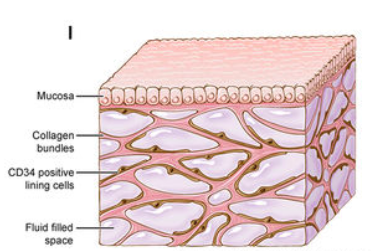
-scientists were looking at some stuff in the inside of a bile duct they were studying in a live patient (this will be important later) using a laser that lets them see the cells in real time. they injected some stuff into the duct and saw the spaces inbetween the cells fill up with fluid in strange, tube-like structures that didn’t correspond with what they expected to be there, so they sectioned and froze them to study them closer; they realized that upon closer inspection, the fluid-filled places were VERY small collagen tubes forming a complex matrix of bundles surrounded by a weird cell covering that seemed to connect them to one another. they called this the Interstitium.
-they sectioned some more places where squeezy things might happen, like the inner linings of the bladder, lungs, lymph nodes, and the soft tissue enclosing our muscles, filled them with the same indicator, and hyper froze them like they did to the first sample and found the same weird matrix of fluid-filled tubing:
they concluded from what they found from this that:
1. our previous thought of the space inbetween the cells in these parts of the body, which we thought were just kinda like, there or whatever doing nothing (a series of spaces that were already called the Interstitium that were largely ignored), are actually full of complex tubing running through a ton of very important parts of your body
2. when the structures they’re chilling around (like your bladder and bowel) contract, the fluid moves around all weird
3. the reason this wasn’t discovered before is because when the tubes are squished too hard- like when scientists are cutting into them- they have a tendency to collapse really easily,especially when being treated with chemicals for microscope use, giving the impression of the kind of tissues that we’ve traditionally seen in specimens and thought of being in these sensitive areas (closely compact and dense cell mats). it turns out that in living people, these tubes run between the cells carrying fluid; the scientists were able to see this initially in live patients using the above mentioned laser technology, and then took live biopsies by quickly freezing the cells in place before removal to prevent their collapse.
4. yes, these can move cancer cells around, which is HUGE seeing as they seem to enclose a LOT of important and delicate muscles in our bodies in one giant, complex system. when they looked at it in cancer patients, the tumors they found seemed to kind of be….leaking….into them…..because the tumors were putting pressure on the fluid tubes….which easily collapse…..and move things that fall into the fluid around….
5. the scientists also explored things like hernias and colon damage in relation to these, but unfortunately this is where my translation powers run out as non-plant-related terminology starts being used lmao im so sorry im like this
tl;dr: the membranes that surround some really important parts of squishy things like our stomach, bowels, colon, lungs, muscles, etc are full of very delicate and complex tubing that runs in a weirdly complex system to other important squishy things throughout our bodies and looks like a weird organ that we didn’t know was there before (or like, we knew about it, we just didn’t know it was so…connected and uh…organy). also it seems to have an impact on the spread of cancer throughout these regions
Graduate of Biomedical Science here; this paper is pretty much understandable to me.
You’ve picked out the main stuff, but here’s some things I think is very interesting:
The discovery of these spaces dramatically expands the lymphatic system. Basically, this is how the lymph nodes are connected to the rest of the body. Before it was kinda like ‘yeah here are the lymph nodes, and the lymph fluid kinda goes to the somehow? idk’. But now we have a whole system. It’s like discovering the entire circulatory system when before you only had the heart to work with.
This is super important for cancers and detecting when a cancer has spread (metastasised, in the lingo). They talk about the spread of cancers into the deeper tissues (such as stomach cancers invading their submucosal tissue and skin cancers pentrating deeper into the dermis layers), but what is most important is that they detected the cancers spreading into the interstitial spaces before there was anything to detect within the lymph nodes. This is super important, as usually lymph node biopsies are done to detect if a cancer is spreading; this is before that very stage. This is literally catching cancers in the act of spreading before they’ve hit another organ this is fucking incredible.
It’s providing an explanation for oedema (or edema, for my US followers), which is the build-up of fluid in certain areas of the body (usually the lower limbs, but it can be anywhere). For so long it’s been like ‘I guess there’s something wrong with your blood vessels??’ but like the lymphatic system, we’ve now got another explanation. ‘Ah, okay, there’s something going down in your interstitial fluid!’ A more effective diagnosis and treatment could be made, Bam! Enrich more people’s lives.
They may play a role in how scar formation works. Some scar tissue can get a bit crazy and grow too much, meaning it needs to be cut away as it hinders movement or it just fucking painful. Perhaps the interstitial tubing/fluid plays a role in this, considering collagen is used in scar tissue, and these spaces are full of it.
There’s clearly communication between these spaces and the digestive system, as they found tattoo pigment from the intestines in these spaces. Tattooing in the intestine is done to mark lesions for removal or observation later on, so the fact this pigment is actively moving out of the digestive system and else means it could play a role in disease we don’t know much about, like inflammatory bowel conditions.
Basically, THIS IS FUCKING HUGE AND COULD POTENTIALLY CHANGE THE GAME IN A BIG WAY.
Thank you OP for sharing this, I haven’t nerded out and been so fascinated by a study in a long time.
ALSO GOOD ON YOU NATURE FOR MAKING THE FULL ARTICLE FREE. HONOUR ON YOU AND YOUR COWS.
“Authors can’t use it in fantasy fiction, eh? We’ll see about that…”
–Terry Pratchett, probably
Try to implement anything but a conservative’s sixth grade education level of medieval or Victorian times and you will butt into this. all. the. time.
There was a literaly fad in the 1890′s for nipple rings for all genders(and NO, it was NOT under the mistaken belief that it would help breastfeeding–there’s LOTS of doctors’ writing at the time telling people to STOP and that they thought it would ruin the breast’s ability to breastfeed well, etc). It was straight up because the Victorians were freaks, okay Imagine trying to make a Victorian character with nipple rings. IMAGINE THE ACCUSATIONS OF GROSS HISTORICAL INACCURACY
There’s something really terrifying about the concept of being pursued by something that can only walk slowly after. Just slooowly following. You can chill for a while if you get far enough away but it’s still coming.
That’s called “persistence hunting” and it’s how humans hunted all sorts of megafauna to extinction, as well as what let our species become so disperse and so numerous. Our existence is a horror story told from the monster’s perspective.
So you’re telling me zombie is absolutely a valid career path
Watch the movie on Netflix called “ It Follows” lol
Basically our hunting super power is that we are really smart, good at tools and can walk/run forever.
If my roommate ran 20 miles twice in one day (possible if she does one in the morning and one in the afternoon) she would out travel a horse.
She is not FASTER than a horse, but if a horse was walking away from her for 8 solid hours, Kait could catch up to it. She could probably also walk after it for an additional 5-10 miles after the run and then stab it when it got too tired to go on.
But kait’s athletic.
I, on the other hand, am a fatty fat who weighs 210 and never exercises ever.
I once, completely spontaneously because i had no money for the train, walked 17 miles in the winter from one end of Chicago to the other. I had also not eaten and was wearing a backpack. It took me 3 hours, but I accomplished it with ease. If i wasn’t a chub goddess, and had eaten and it was summer and I wasn’t wearing a backpack with a laptop in it, imagine how far and fast I could have gone.
Now. Horses can only sustain a run for about 15 miles ( at 8-10mph it takes them a little over an hour).
If my fat ass was walking towards a horse for 3 hours and it was literally running away from me. It would become exhausted after 15 miles and unless it can recover completely in 2 hours for another lengthy sprint, I can reasonably catch up to it and stab it. (not that i would ever stab a horse. horses are terrifying and should be regarded with suspicion, respect and fear)
The longest run ever was 350 miles over 80 hours without sleep.
We are endurance monsters.
humans terrify me
“Our existence is a horror story told from the monsters perspective” is one of the coolest and most terrifying sentences I’ve ever thought about
i hate the trope of kids giving their favorite stuffed animal to a younger child as a sign of compassion and coming of age, as if this is something that should be expected of kids as they grow up
im 22 and i dont care who you are you’ll have to pry my ikea shark out of my cold dead hands
I can’t remember the name of the study, but there was a theory, supported by pretty good evidence, that if you have your comforter, be it blanket, plush, pacifier, whatever, taken away when you’re not ready to give it up, even if you’re a dinky little kid, it can have really long lasting effects. People who kept their comforters into adulthood were less likely to smoke, drink or do drugs, tended to have better family relations and home lives etc, while those that saw their comforter removed or destroyed were more likely to be drawn to more serious “comforts” elsewhere. The more extreme the removal, the more extreme the result. Typically.
We learn at our own pace to make and break connections and emotional ties, and the situation is forced upon us, we seek comfort. But whoa wait, you can’t possibly have comfort anymore, you’re five. You’re a big kid now.
So when parents are forcing you to “grow up” by tearing the only comfort in the world from you, they could actually be messing you up big time.
In psychology they’re called “transitional objects” and they help the neurobiological process of helping children learn to internalize the experience of being loved and cared for, which is an essential part of learning to regulate your emotions. They are REALLY important.
I wonder what it means psychologically that I’ve started getting a few more for myself?
Well, there’s a process we call “re-parenting yourself” where you give yourself the love you missed out on in childhood, and thereby start to heal the pain you’ve carried since then. And using childhood comfort objects can be part of that.
Writing fanfic is a lot like inspecting a crime scene, in which fandom is that crime scene haha. Anyone striving to be a good writer inspects every angle, every tiny fragment of evidence, and ponders motive – all to build a profile of the kind of character you’re dealing with.
Like you said, we’re given so little to go off when it comes to movie characters. Writing for a television fandom is a totally different thing, because (for example) you know that Willow’s mum once tried to burn her at the stake for witchcraft and that Xander’s parents didn’t set a great example for him.
The most insight we’re given into Beca’s character is that her dad, presumably, walked out on her and her mum, that she’s never had many girls who were friends, and we assume these are the two catalysts for the big issues in the first movie; her reluctance to start anything with Jesse and her walking away from the Bellas. We’re not told that explicitly, but it’s inferred. We’re given a glimpse of her attitude and the way she interacts with others, we’re told what she enjoys doing in her free time and her aspirations for the future. It’s sort of the bare bones outline for a character in a book.
And we’re told even less about the other Bellas. We get bullet point characteristics:
– Overbearing father. Control freak. – No personal boundaries. Singing is her life. – Hot one. Likes sex. A lot. – Lesbian gambler. – Silent but probably deadly. – Boy next door type who likes movies and wants to date the MC. – (Newbie who just wants to sing and belong to a sisterhood, oh and writes her own songs.) – (Was horrendously poor and probably came over in a shipping container.)
It’s not a lot to go off and, yes, we have the next two movies to add bits and pieces to what we each determine their personality to be. And that’s the thing, every writer is going to write them differently. If one person happens to write them in a way that jives with how you the reader THINKS they would exist as a person, that’s awesome. But the next reader might not agree.
Jesse is a perfect example of this, in that the way his character is viewed is so drastically different from person to person. A lot of people see him as pushy and overbearing. Someone who wants to change Beca into someone she isn’t. But that view can be, and I’m sure is, applied to Chloe. It’s all about perspective. You’ll never see Jesse as a pushy asshole in my fics, because I don’t see him like that.
So, do I feel like I stay true to the characters? I suppose yes, in a way. I try to stay true to how I see them. And when I talk about them in term of my fanfics, I’ll usually say “my Beca” or “my Chloe” because that’s kind of what they are? We don’t know anything about Chloe’s family, but I’ve taken the liberty of giving her a brother and killing off her dad.
I don’t think anyone can ever really stay “true” to a character. I mean, look at the movies. We all have issues with the way the characters have changed over the course of them and that’s the creator of the characters writing them!
I think, if people read my stuff and take my versions of the characters away as something close to “canon”, that’s freaking amazing. It’s the best kind of compliment.
Man, this is a tangent. I hope I answered the initial question?? Haha. Also, sorry this took me forever to answer. It required a lot of thought!
Do you ever think about the issues of privacy in fandom? Have you or a friend ever been “outed” as a fan? How do you feel about academic research on fandom? Do you just have a lot of feelings about ethics in fandom? Most importantly, do you want to talk about these critical topics?
My name is Brianna Dym, longtime fan community member, and also researcher in the Department of Information Science at University of Colorado Boulder. I’m looking for people interested in talking about privacy and ethics in fandom! If you’ve been involved in fandom for a while, I would love to have you participate!
We can conduct the interview in the medium of your choice – either text-based chat or voice. You also don’t have to answer questions you don’t want to, and can stop at any time. We will ask for some basic demographics (any of which you can decline to answer), but won’t require any identifying information.
To volunteer to participate (or if you have any questions), please email brianna.dym@colorado.edu!
Hey guys! You know that survey that went out recently and the subsequent cool results? That’s work that I’m doing with Brianna, a PhD student here! She’s recruiting for interview participants to talk about ethics, privacy, and fandom. Please consider reaching out to her, and sharing this!
Particularly for those who were kind enough to participate in our survey last week, or to share it even after we halted data collection (because we received so many responses so quickly!), I wanted to give you something interesting right away. As you know, the academic writing and publishing process can be lengthy, so who knows when you might get a full paper from us! But in the meantime, this was the analysis I did this weekend.
The survey asked for participants to indicate what platforms they use/used from a given list, and also to indicate a date range (e.g., Tumblr 2006-2018). I parsed those date ranges in order to determine for a given platform how many of our participants were active in a given year. (This actually gave me an excuse to write some code for the first time in years. Jupyter Notebooks are super cool.)
(Click on the image above for full resolution!)
The Y axis is number of survey participants who indicated using the platform during a given time, and the X axis is year. (This starts at 1990, though I’ll note there were 10-ish participants who indicated using usenet, email lists, and/or messageboards in the 1980s.)
Some interesting things to note: (1) See how fanfiction.net has a spike where there was a big drop off but then it stabilized? That’s around the time that they cracked down on adult content. (2) I expected to see Livejournal decline drastically sooner, but it actually continued to climb a bit after Strikethrough and related things, until Tumblr and AO3 both started getting very popular. Based on what I’ve seen qualitatively so far, I do think that people were starting to leave, but that there had to be critical mass elsewhere in order for that leaving to start going en masse. There were also a lot of people who continued using Livejournal while they picked up other platforms as well. (3) As my PhD student collaborator Brianna said, we have “a beautiful arc of AO3 and Tumblr being besties forever.” (This makes sense to me based on some findings from my previous work about AO3, and how Tumblr filled in the gap of social interaction left by Livejournal.)
In the “other” category of fan platforms used, the most popular was Discord. This doesn’t surprise me! For the most part, participants had only been active in it for the past couple of years, which is why it didn’t show up specifically in the survey (which was constructed based on interview data we already had). We also saw less frequent mentions of Facebook, reddit, delicious/pinboard, and IRC.
Digging into the qualitative data will give this data much more explanatory power, but I think this is very interesting!
We also asked participants what their primary fandom was for each platform they used. Based on a pretty simple analysis (most popular words!), here are the top five fandoms from each platform:
Usenet: Star Trek, Buffy, X-Files, Star Wars, Sailor Moon
Email Lists: Harry Potter, Star Trek, Buffy, X-Files, Gundam Wing
Messageboards: Harry Potter, Buffy, Star Wars, Lord of the Rings, Sailor Moon
Fandom-Specific Archives: Harry Potter, Buffy, Stargate, X-Files, Doctor Who
Fanfiction.net: Harry Potter, Naruto, Buffy, Star Wars, Gundam Wing
Livejournal: Harry Potter, Supernatural, Stargate, Doctor Who, Merlin
DeviantArt: Harry Potter, Naruto, Kingdom Hearts, Supernatural, Final Fantasy
Dreamwidth: Harry Potter, Supernatural, Marvel, Stargate, RPF
Archive of Our Own: Marvel, Star Wars, Harry Potter, Supernatural, Teen Wolf
Tumblr: Marvel, Star Wars, Supernatural, Harry Potter, Teen Wolf
Twitter: Star Wars, Supernatural, Marvel, RPF, Yuri on Ice
Note that this is NOT necessarily representative of the overall popularity of certain fandoms on these platforms. Our survey, because it was targeting research questions about fandom migration, asked for participants who had been in fandom for 10+ years. This means that our results skewed older (mean 31; median 30; SD 8.6). And of course, most of the participants are currently in fandom, which means that it also misses people who have left fandom.
It is interesting to see the change across platforms and over time though! My favorite tidbit is how Star Wars was popular, dropped off, and then came back with gusto.
This is only the tip of the iceberg on this data analysis! If there’s anything else that is easily shared as we do this analysis, I’ll continue to do so. Otherwise, wish us luck and I’ll eventually share a completed analysis if/when (fingers crossed!) we publish on this.
I have a list of emails from everyone who participated and wanted to give us that info to share the results. If you’d like to be added to that list, send me an email at casey.fiesler@colorado.edu. Or just feel free to follow me here, or myself and Brianna on Twitter.

 Question of Smoke