HEY THIS IS IMPORTANT whats your favorite place to find drawing references?
so far we’ve got
senshi stock
croquis cafe
line-of-action.com
quickposes.com
posemaniacs
clip studio paint models
pexels.com
sketchdaily
eggazyoutatsu atarichan drawer
designdoll
if you have any more please reply!
Unsplash: All photos published on Unsplash can be used for free. You can use them for commercial and noncommercial purposes. You do not need to ask permission from or provide credit to the photographer or Unsplash, although it is appreciated when possible. More precisely, Unsplash grants you an irrevocable, nonexclusive copyright license to download, copy, modify, distribute, perform, and use photos from Unsplash for free, including for commercial purposes, without permission from or attributing the photographer or Unsplash. This license does not include the right to compile photos from Unsplash to replicate a similar or competing service.
Freeimages: You can use the images in digital format on websites, blog posts, social media, advertisements, film and television productions, web and mobile applications. In printed materials such as magazines, newspapers, books, brochures, flyers, product packaging for decorative use in your home, office or any public place or personal use. The rights granted to you by FreeImages.com are: Perpetual, meaning there is no expiration or end date on your rights to use the content. Non-exclusive, meaning that you do not have exclusive rights to use the content. FreeImages.com can license the same content to other customers. Unlimited, meaning you can use the content in an unlimited number of projects and in any media. For purposes of this agreement, “use” means to copy, reproduce, modify, edit, synchronize, perform, display, broadcast, publish, or otherwise make use of.
Stocksnap: Every single image on StockSnap are governed exclusively by the generous terms of the Creative Commons CC0 license. Specifically, that license means you can do any and all of the following: Download the image file.Publish, revise, copy, alter, and share that image. Use the image (as-is or as you’ve altered it), in both personal and commercial contexts. Moreover, you can put StockSnap CC0 images to any of these usages without buying the right to do it, acquiring written permission from the image’s creator, or attributing the work to the image creator. In other words, there’s no fee to download or use these StockSnap images in accordance with the CC0 license. They’re free to download, free to edit, and free to use – even in a commercial project! You don’t even need to attribute the image to the creator, the way you do with other CC or traditional copyright licensing schemes. (However, even though it’s not required, we here at StockSnap do encourage you to include an appropriate attribution. It’s a nice thing to do.)
Burst.Shopify: Burst is a free stock photo platform that is powered by Shopify. Their image library includes thousands of high-resolution, royalty-free images that were shot by their global community of photographers. You can use their pictures for just about anything — your website, blog or online store, school projects, Instagram ads, facebook posts, desktop backgrounds, client work and more. All of their photos are free for commercial use with no attribution required.
Pixabay: Images and Videos on Pixabay are released under Creative Commons CC0. To the extent possible under law, uploaders of Pixabay have waived their copyright and related or neighboring rights to these Images and Videos. You are free to adapt and use them for commercial purposes without attributing the original author or source. Although not required, a link back to Pixabay is appreciated.
Viintage: All images hosted by Viintage.com are considered to be public domain images, each image is presumed to be in the public domain. It may be distributed or copied as permitted by applicable law. Viintage.com assumes no ownership of the images and they may be downloaded and can be used free of charge for any purpose. They may be downloaded and used for commercial and personal use. Understand “public domain” as the permission to freely use an image without asking permission from the photographer or the illustrator. Thus, the creator of the work will not sue you for violating his/her copyrights. It is your responsibility to make sure, displaying the image does not violate any other law. Viintage.com assumes no responsibility for how or where you use the images found on the site.
Gratisography: You may use Gratisography pictures as you please for both personal and commercial projects. You can adapt and modify the images and get paid for work that incorporates the pictures. This includes advertising campaigns, adding your logo or text to an image, printed in any size print runs (e.g., book covers, magazines, posters, etc.), on your website, blog, or other digital mediums, and on merchandise as long as the picture itself is not the merchandise.
WHAT ARE YOU TALKING ABOUT YOU ARE THE BEST ART TEACHER EVER OMFG THANK YOU
If all teachers taught their subjects the way just taught this, I would have been more interested in what they had to say and less in just doing the bare minimum to pass a test.
This is actually the art teacher version of michael jones im scrreaming
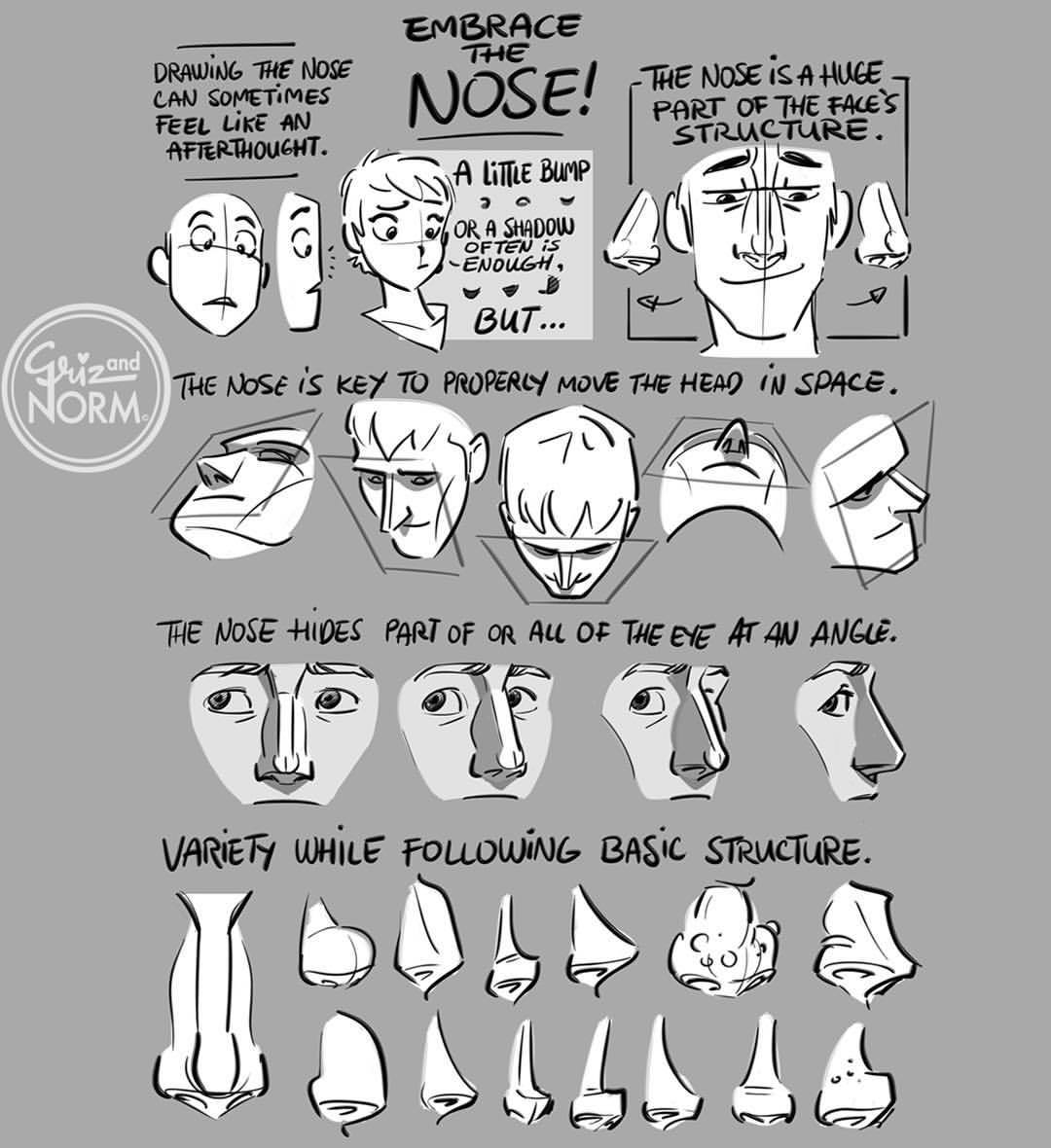
Tuesday Tips – Embrace The Nose / It’s very easy to take shortcuts when drawing the nose, and honestly, it’s fine most of the time. The nose is right in the center of the face and can unintentionally draw a lot of attention if constructed poorly. But when it’s embraced, it can do wonders. It’s key to track the facial features at odd angles and can bring a ton a personality to a character design. Use it or lose it! -Norm @grizandnorm #100tuesdaytipsbook #100tuesdaytips #tuesdaytips #arttips #arttutorial #embracethenose
ok, i’ve decided to make a tutorial on how to prepare these graphite blenders (english is not my first language so keep that in mind) hope i explain myself well:
i think they’re called stumps in english, whatever, the point is i’ve seen a lot of artists ditching them and recommending using q-tips instead becaue “they’re hard and don’t blend well” or using them right away, so i thought i would show you how to soften them. some of you may know this but i’m sure a lot of you don’t
step 1: buying them (i recommend getting 3, the smaller one, a medium size one and a large one)
step 2: search a hard surface (the floor is great) and get a hammer
step 3: get one stump and start hammering it, you have to hammer the whole stump but go a little bit harder on the tips
step 4: roll the stump and hammer all sides (don’t go crazy it has to stay round) it may take a while
step 5: to know when you’re done you gotta squeeze the tip, it’s gotta be soft enough to form an oval between your fingers but not flaten right away
step 6: choose the softer tip and put the stump vertical with the chosen tip up, hit the floor repeatedly to get rid of the other tip, keep doing that until the bottom is flaten, you should end up with something like this:
step 7: once you’re done, put tape around the point, right where the cone of the point starts forming
step 8: get some sandpaper and sand the tip (horizontally like in the gif), keep the sandpaper in your case because that’s how you “clean” the tip
i had these for almost 7 years (yeah i know they look nasty, art isn’t clean)
and they work perfectly
Great for traditional artists! I love blending stumps.
For those who still use pencils, you may want to consider using these to get the full potential of pencil and carbon drawings.
What the frig!? I took every art class my college had to offer and they never taught me THAT’S how you use those!? D:<














 Question of Smoke